Skincare Claims: What Brands Should Consider Before Launch
A strong formula does not automatically justify every marketing claim.
Claims should be considered during product development rather than after the formula and packaging have already been finalized.
This article covers claims as a development discipline. The market-specific frameworks are covered in the US market and GCC market development.
01 Define the Intended Use
Start by defining:
“What is this product designed to do?”
That definition influences formula, packaging and communication.
It also determines which regulatory category a product may fall into in a given market – which is why intended use is decided at the brief stage, not at the marketing stage. The brief structure is in how to prepare a skincare product brief.
02 Avoid Overreaching Claims
Terms related to disease treatment, prevention or therapeutic effects may create additional regulatory considerations depending on the market.
This is particularly important for categories such as:
- Acne
- Post-procedure care
- SPF
- Intensive treatment products
These are also the categories where product positioning is most commercially valuable – so the work is worth doing carefully rather than avoiding.
03 Match Claims to the Formula
The product claim should have a clear relationship to the finished formulation.
If the claim describes an effect, the brand should be able to explain which part of the formula supports it and on what basis.
04 Match Claims to the Market
Claims are not regulated identically worldwide.
A claim acceptable in one market may require different wording or evidence in another.
This is one reason a single global claim list is rarely efficient – see Southeast Asia development for how market-specific wording interacts with product design.
05 Build Claims Into Development
The better workflow is:
rather than:
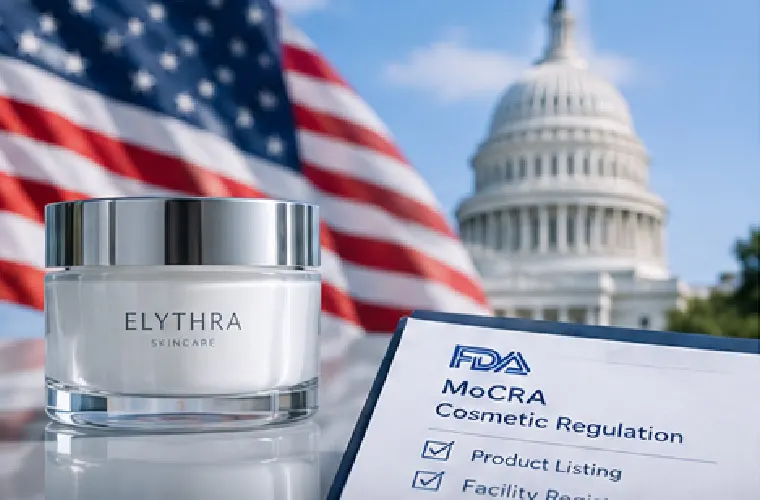
In the U.S., the FDA notes that cosmetic companies have responsibility for product safety and safety substantiation, while MoCRA establishes additional responsibilities for applicable cosmetic businesses.1
The Key Principle
Develop the product and the claims together.
This makes it easier to create a product that is commercially attractive while remaining aligned with the requirements of the intended market.
Final Thoughts
Claims are a development constraint, not a marketing afterthought. Deciding them late is the most reliable way to end up with packaging that cannot be used.
If you want to check a claim direction before committing to artwork, send us the product concept and intended market. See documentation to request and our OEM/ODM services.
References
- U.S. Food and Drug Administration — Modernization of Cosmetics Regulation Act of 2022 (MoCRA). fda.gov/cosmetics/cosmetics-laws-regulations/modernization-cosmetics-regulation-act-2022-mocra
Ready to Develop Your Skincare Line?
Share your product concept, target market and estimated quantity. Our team reviews your brief and comes back with a formulation and production proposal.