What Documents Should You Request From a Skincare OEM Manufacturer?
Before mass production, buyers should understand what product, quality and market documentation will be available for the project.
The exact document list depends on the product and target market.
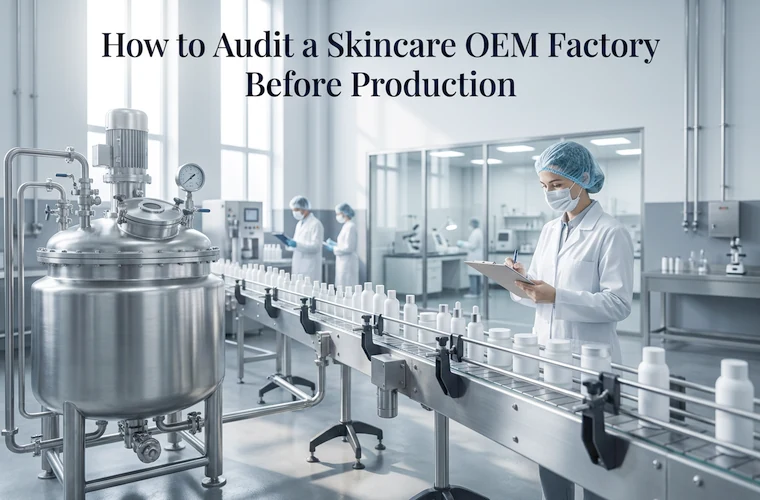
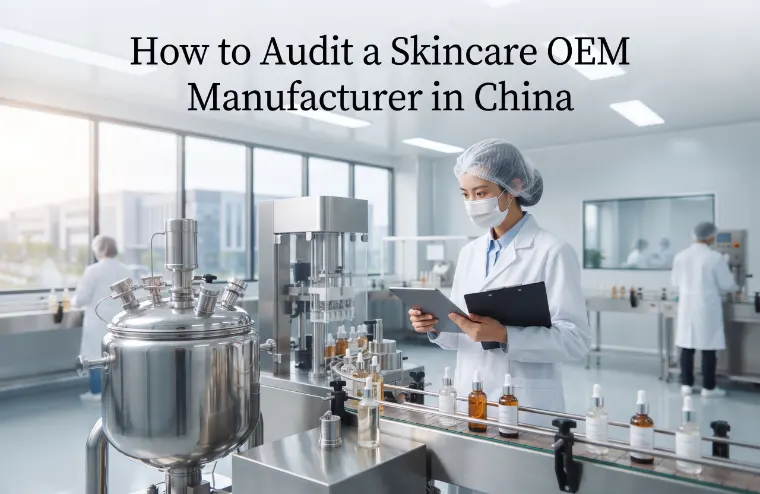
This article lists the document families to ask about. The factory-evaluation side of the same relationship is covered in auditing a skincare OEM manufacturer and auditing a skincare OEM factory before production.
01 Product Specification
This should define the approved product characteristics and relevant technical parameters.
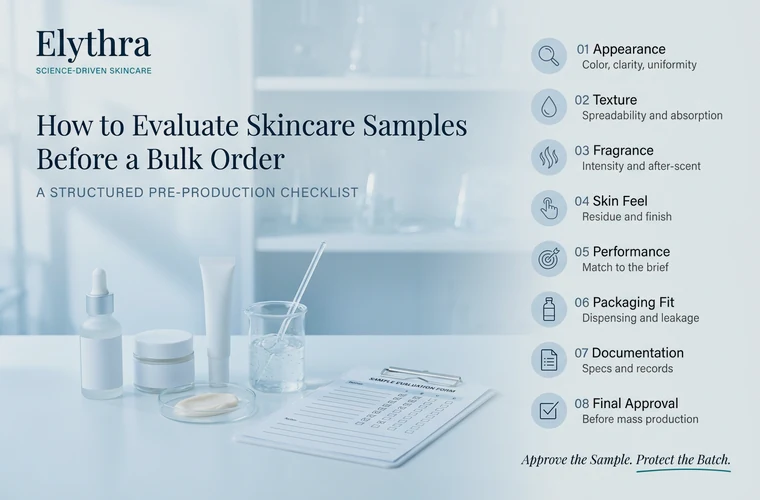
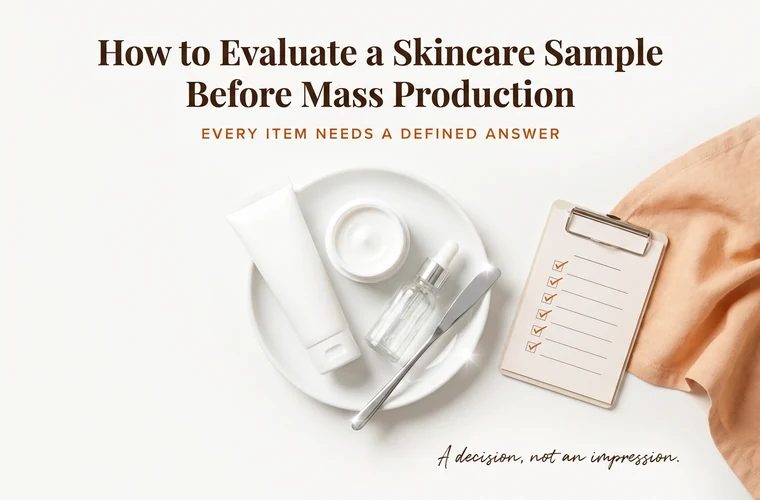
In practice this is the document that settles most disputes, because it is the agreed description of what was ordered – the same specification approved at the sample stage in the sample approval checklist.
02 Ingredient Information
Brands may need ingredient information for:
- Label development
- Claims review
- Market documentation
- Regulatory review
Ingredient disclosure requirements differ by market, so it is worth confirming the required format rather than assuming a single ingredient list will serve every destination.
03 Certificate of Analysis
A COA can document specified quality characteristics for a relevant batch or material, depending on the project.
Ask what the COA covers – raw material, finished product, or both – since the answer differs between suppliers.
04 Packaging Specifications
Packaging documentation may include:
- Component information
- Dimensions
- Material
- Filling requirements
- Artwork specifications
Artwork specifications matter for print quality and for the filling line, and are usually needed before packaging is ordered – see packaging compatibility.
05 Quality Documentation
Depending on the project, buyers may request relevant quality-control and batch documentation.
What is reasonable to expect scales with the product category and the destination market. For a U.S.-bound product, the regulatory framework is described in developing a skincare product for the US market.
06 Market-Specific Documentation
Documentation requirements vary by destination.
For example, under the U.S. MoCRA framework, applicable cosmetic facilities generally have registration responsibilities, and responsible persons must list marketed cosmetic products with the FDA. The FDA also explicitly states that facility registration and product listing are not FDA approval or certification programs.1
That distinction is frequently misunderstood in sourcing conversations, and it is worth confirming in writing which party handles each obligation.
Ask for the Documentation List Early
Do not wait until production is complete.
Ask your OEM partner:
“What documents will be available for this product, and which party is responsible for each market requirement?”
That question can prevent significant delays later.
Final Thoughts
Documentation is part of the product, not paperwork that follows it.
If you want to confirm which documents apply to your product and destination, send us the product and target market. See also the US market, GCC market development and our OEM/ODM services.
References
- U.S. Food and Drug Administration — Registration & Listing of Cosmetic Product Facilities and Products. fda.gov/cosmetics/registration-listing-cosmetic-product-facilities-and-products
- U.S. Food and Drug Administration — Modernization of Cosmetics Regulation Act of 2022 (MoCRA). fda.gov/cosmetics/cosmetics-laws-regulations/modernization-cosmetics-regulation-act-2022-mocra
Ready to Develop Your Skincare Line?
Share your product concept, target market and estimated quantity. Our team reviews your brief and comes back with a formulation and production proposal.