
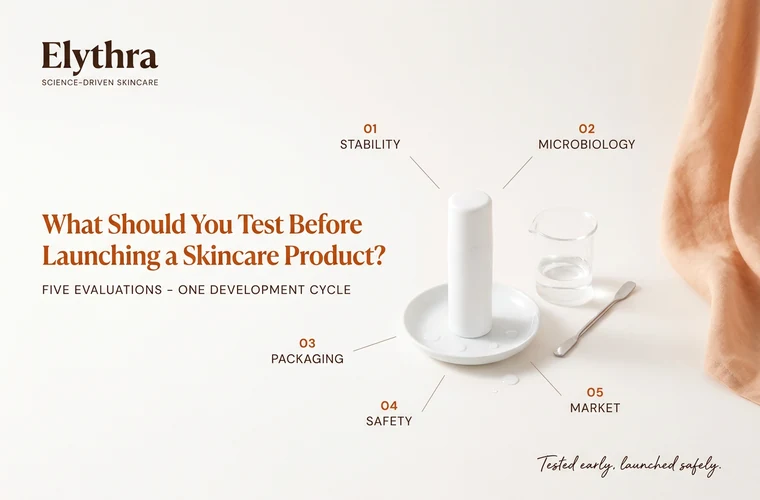
What Should You Test Before Launching a Skincare Product?
A skincare formula may look and feel right during development, but that does not automatically mean it is ready for commercial production.
Testing should be planned around the formula, packaging, intended use and destination market.
This article is an overview of what needs to be evaluated. The individual programmes are covered in more depth in stability testing before launch and microbial testing for skincare products.
01 Stability
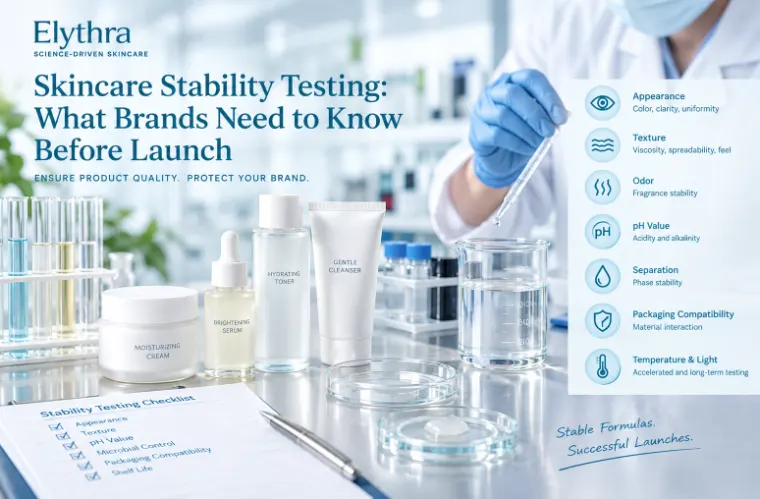
Stability evaluation helps determine how the product behaves under defined conditions over time.
Brands may monitor changes in:
- Color
- Odor
- Texture
- Separation
- Appearance
- Other relevant physical characteristics
Stability is not a pass or fail sticker. It defines the shelf life and storage conditions you can responsibly claim – and it is the reason the evaluation should start with the first full sample, not after packaging is ordered.
02 Microbiological Quality
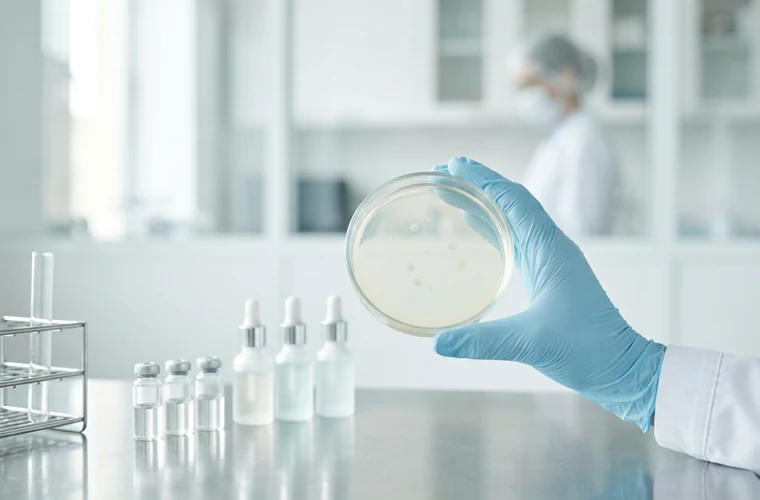
Water-containing cosmetic products require appropriate microbiological control.
The exact testing program depends on the finished formula and manufacturing process.
Preservation strategy is a formulation decision, so the evaluation belongs with formula development rather than at the end of the project.
03 Packaging Compatibility
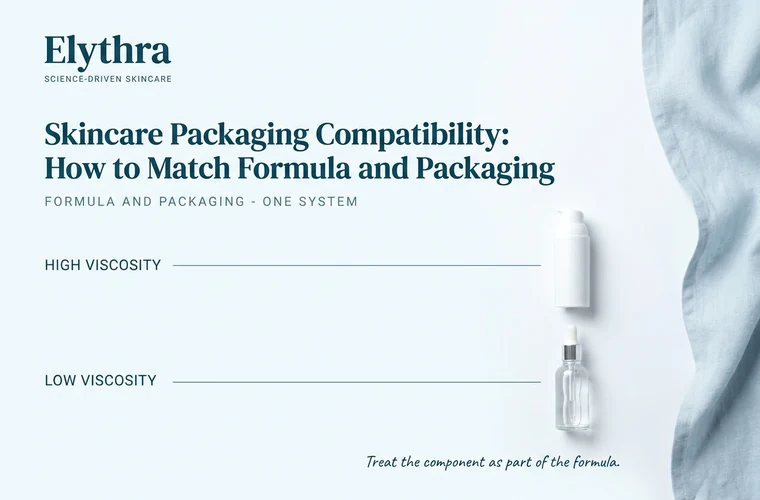
Formula and packaging should be evaluated together.
Potential issues can include:
- Formula-package interaction
- Leakage
- Dispensing problems
- Material compatibility
- Changes in product appearance
The practical detail behind this step is covered in skincare packaging compatibility.
04 Safety Substantiation
For the U.S. market, the FDA states that cosmetic companies and individuals have responsibility for product safety and for maintaining records supporting adequate safety substantiation. The FDA does not prescribe one universal testing regimen for every cosmetic product.1
The practical implication for brands is that “the factory tested it” is not a compliance position. Responsibility sits with the brand, which is why the documentation trail matters as much as the test itself.
05 Market-Specific Requirements
The appropriate documentation and evaluation can vary depending on:
- Country
- Product category
- Ingredients
- Claims
- Intended use
- Sales channel
Therefore, testing should not be treated as a final checklist.
It should be considered during formulation and packaging development – see developing a skincare product for the US market and GCC market development for two market-specific examples.
A Practical Workflow
A good OEM partner should be able to explain which evaluations are relevant to your specific product rather than simply offering a standard testing package.
Final Thoughts
Testing is a development input, not a final gate.
If you are unsure which evaluations apply to your product and market, send us the product concept and destination market and we will map the relevant work. Our OEM/ODM services include the product development steps that come before this stage.
References
- U.S. Food and Drug Administration — Modernization of Cosmetics Regulation Act of 2022 (MoCRA). fda.gov/cosmetics/cosmetics-laws-regulations/modernization-cosmetics-regulation-act-2022-mocra
Ready to Develop Your Skincare Line?
Share your product concept, target market and estimated quantity. Our team reviews your brief and comes back with a formulation and production proposal.