
How to Evaluate Skincare Samples Before a Bulk Order
Receiving a skincare sample is an important milestone in product development.
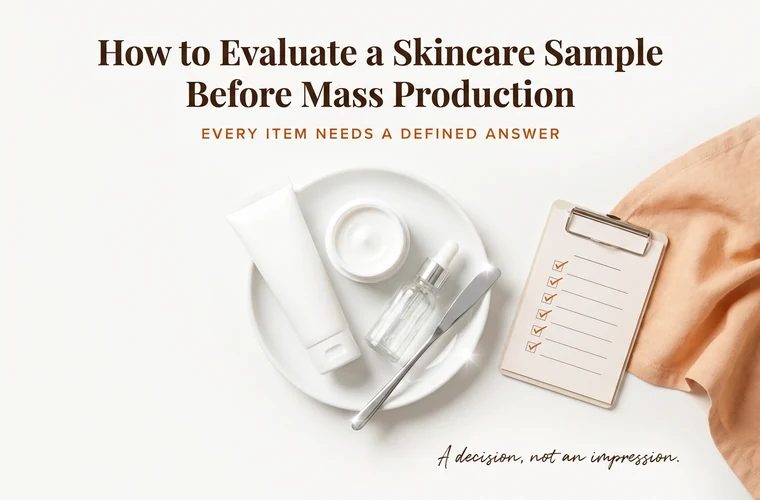
But approving a sample should involve more than simply deciding whether you like the texture.
For B2B buyers, sample approval should consider the product from both a consumer and manufacturing perspective.
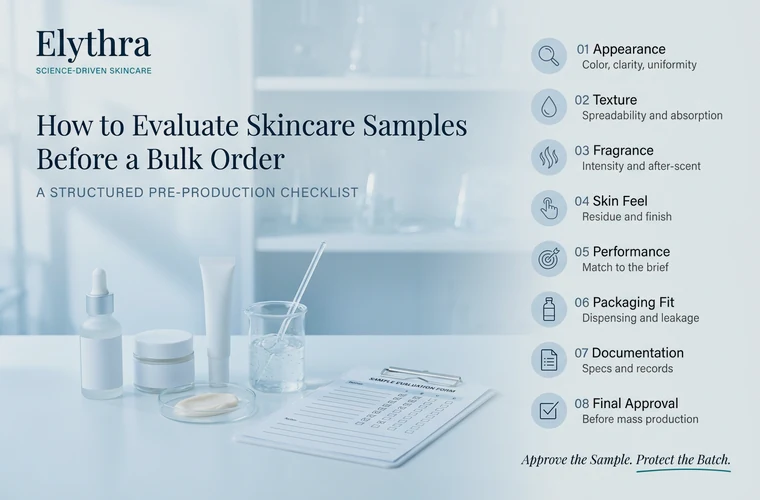
01 Appearance
Check:
- Color
- Clarity
- Uniformity
- Separation
- Surface appearance
Document the approved appearance so future production can be compared against the approved standard.
02 Texture
Evaluate:
- Thickness
- Spreadability
- Absorption
- After-feel
- Stickiness
- Residue
Texture is especially important for products positioned around premium sensory experiences.
03 Fragrance
If the formula is fragranced, evaluate:
- Fragrance intensity
- Overall character
- Consistency
- After-scent
If the product is fragrance-free, confirm that the formula meets the intended sensory expectations.
04 Skin Feel
Consider how the product feels during and after application.
The sensory profile should match the intended market positioning.
05 Product Performance
Evaluate the product against the original product brief – see how to prepare a skincare product brief if the requirements need to be restated.
Ask:
Does the sample actually deliver the product experience we intended to create?
Avoid changing the formula simply because another product looks attractive.
06 Packaging Compatibility
If packaging samples are available, test the formula with the intended packaging – the ready-made vs fully customised trade-off is covered in stock packaging vs custom packaging.
Check:
- Dispensing
- Leakage
- Compatibility
- Ease of use
- Product recovery from the container
07 Consistency Between Samples
If several samples are provided, compare them carefully.
A professional development process should document the approved formula and sample version so that future production has a clear reference.
08 Documentation
Before mass production, clarify the relevant product documentation and specifications required for your project and target market.
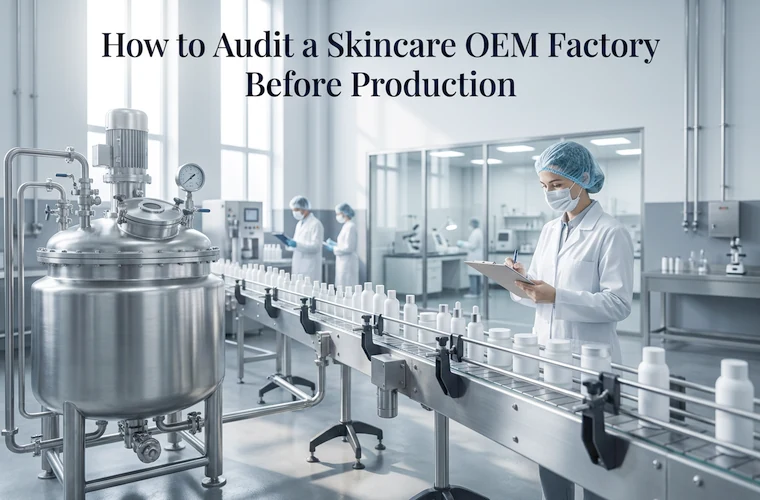
The exact documentation will depend on the product and destination market; documentation control is also one of the areas checked during a factory audit.
09 Final Approval
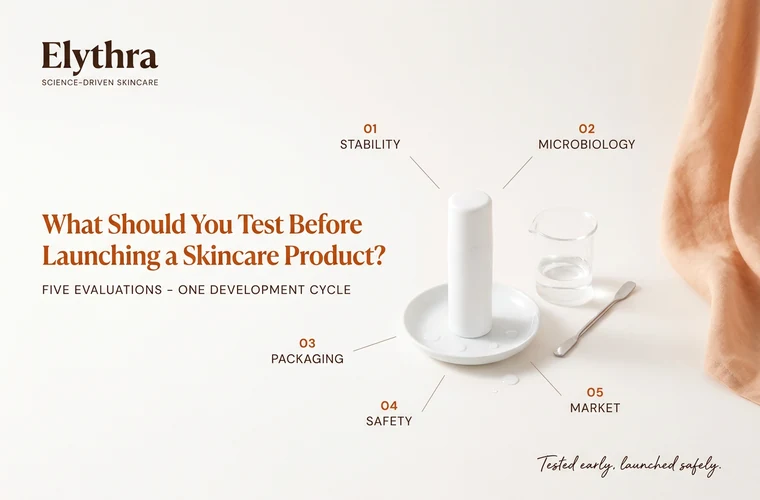
A useful sample approval process is – the technical checks behind it are stability testing and microbial testing:
Sample Approval Is a Business Decision
A sample is not only a product.
It represents the starting point for your future production batches.
That means approval should consider:
- Product performance
- Consumer experience
- Formula consistency
- Packaging
- Quality requirements
- Commercial positioning
Final Thoughts
A structured sample evaluation process can help brands make better product-development decisions before committing to bulk production.
For OEM/ODM projects, clear sample approval criteria also make communication between the brand and manufacturer more efficient – it is one of the checkpoints that sits inside the wider product development timeline.
Ready to Develop Your Skincare Line?
Share your product concept, target market and estimated quantity. Our team reviews your brief and comes back with a formulation and production proposal.