
How to Choose the Right Skincare Product Format for Your Formula
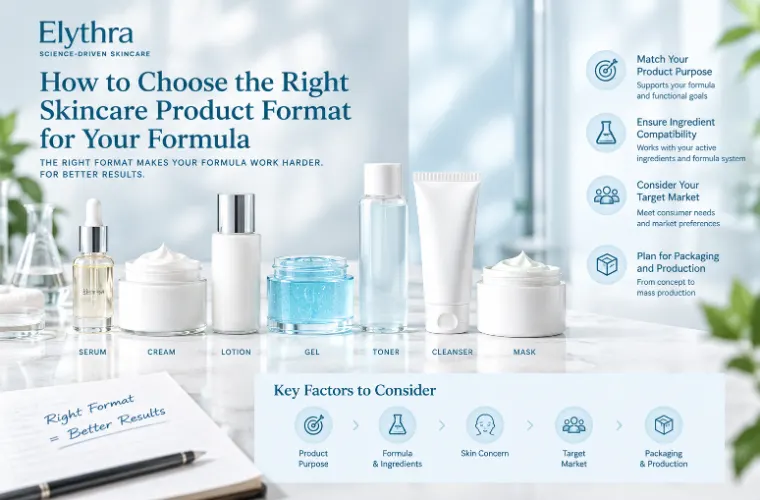
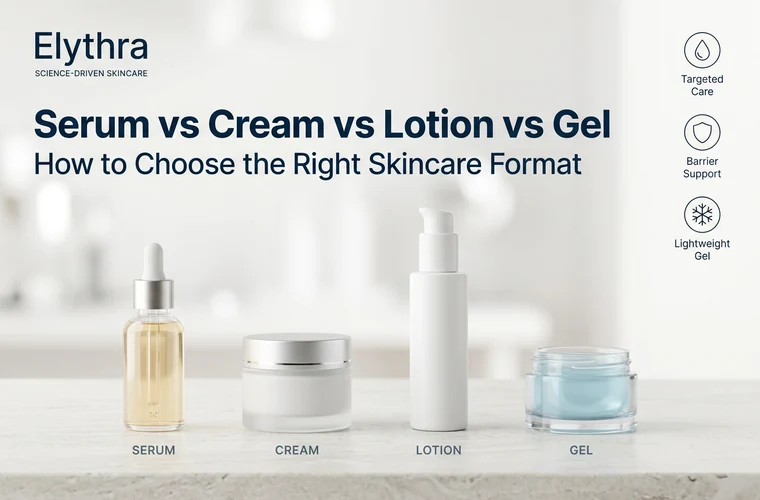
Choosing a skincare product format is more than deciding whether your product should be a serum, cream, lotion or gel.
The format affects the product’s sensory experience, ingredient compatibility, packaging, positioning, production process and ultimately how consumers use it.
For brands developing products with an OEM/ODM manufacturer, choosing the right format early can help create a more consistent product concept from formula development through packaging and mass production.
This guide explains the key factors to consider when selecting a skincare product format.
01 Start With the Product’s Purpose
The first question is not:
“Which format is most popular?”
Instead, start with:
“What should this product do?”
A product designed for targeted active delivery may require a different format from a product intended for daily barrier support.
For example:
- Targeted brightening products may use lightweight serum formats.
- Barrier-focused products may benefit from cream or lotion formats.
- Soothing products may use gel or lightweight emulsion textures.
- Cleansing products require specific wash-off formulations.
- Intensive care products may use masks, creams or concentrated treatments.
The format should support the product concept rather than determine it.
02 Serum
Serums are commonly positioned as concentrated, targeted skincare products.
They can be designed around specific functional goals such as:
- Brightening
- Anti-aging
- Hydration
- Barrier support
- Acne care
- Post-procedure recovery
Their relatively lightweight texture can also make them suitable for layering within a skincare routine. A brightening booster serum is a typical example of this positioning.
For brands developing a targeted functional skincare line, serum is often considered one of the core product formats.
03 Cream and Lotion
Creams and lotions are commonly used when moisturization, conditioning and barrier support are important parts of the product concept.
The main difference is usually the sensory profile and emulsion structure.
A lotion may provide a lighter application experience, while a cream can be positioned toward richer or more intensive care – see this firming cream for a richer positioning.
The right choice depends on:
- Target skin type
- Desired texture
- Formula requirements
- Climate
- Consumer preferences
- Packaging
- Product positioning
04 Gel
Gel formats can provide a lightweight and refreshing sensory experience.
They can be suitable for concepts focused on:
- Soothing
- Hydration
- Cooling
- Lightweight moisturization
- Oily or combination skin positioning
However, a gel should not be selected simply because it feels lightweight.
The formulation team needs to consider whether the desired active ingredients and overall formula architecture are compatible with the intended gel system.
05 Toners and Essences
Toners and essences can occupy different positions depending on the market and brand strategy.
They may be designed for:
- Hydration
- Skin conditioning
- Lightweight active delivery
- Preparation before subsequent skincare steps
For a new product line, the decision should be based on whether the format adds meaningful value to the overall routine.
06 Cleansers
Cleansers are fundamentally different from leave-on skincare products because they are designed for rinse-off use.
Formulation decisions therefore need to consider:
- Cleansing performance
- Skin feel after rinsing
- Surfactant system
- Foam characteristics
- Skin comfort
- Fragrance
- Packaging
A cleanser positioned for sensitive skin, for example, may require a very different formulation strategy from a deep-cleansing product.
07 Match the Format to the Skin Concern
The same skin concern can potentially be addressed through different product formats.
For example, a brightening line might include:
The correct format therefore depends not only on the concern but also on the role the product plays within the routine.
08 Consider Your Target Market
Consumer preferences can vary significantly between markets.
Climate, skincare habits, purchasing behavior, price positioning and local competition can all influence product format selection.
A lightweight gel may be attractive for a warm climate, while a richer cream may be more appropriate for a product positioned around intensive barrier care.
This is why product development should consider the target market from the beginning.
09 Formula and Packaging Must Work Together
The formula and packaging should not be developed independently.
Factors such as:
- Formula viscosity
- Air exposure
- Light sensitivity
- Dispensing requirements
- Compatibility
- Filling process
can influence packaging selection. For example, a highly sensitive formula may require a packaging solution that provides greater protection from environmental exposure – the same principle that applies to skin stability testing before launch.
10 Work With Your OEM Partner Early
A professional OEM/ODM partner should be involved before the final format is locked.
The development process can evaluate:
This approach helps ensure that the final product is commercially practical rather than simply attractive on paper.
Final Thoughts
There is no universally “best” skincare product format.
The right choice depends on the product’s purpose, formula, target consumer, market positioning, packaging and production requirements.
For brands building functional skincare products, the format should be treated as part of the overall product development strategy – which is the point where format decisions connect to how to build a skincare product line and to a wider serum vs cream vs lotion vs gel comparison.
If your format direction is already clear, you can move straight to how to choose active ingredients for a skincare formula or send us your product requirements.
Ready to Develop Your Skincare Line?
Share your product concept, target market and estimated quantity. Our team reviews your brief and comes back with a formulation and production proposal.