
Serum vs Cream: Choosing the Right Format for Functional Skincare
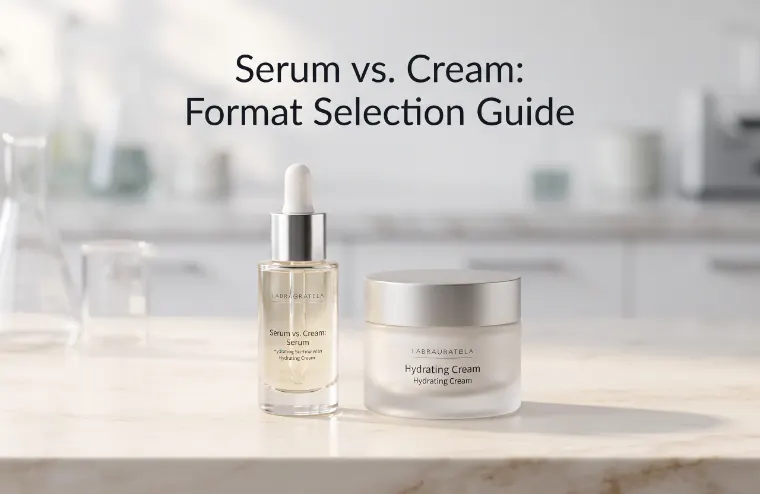
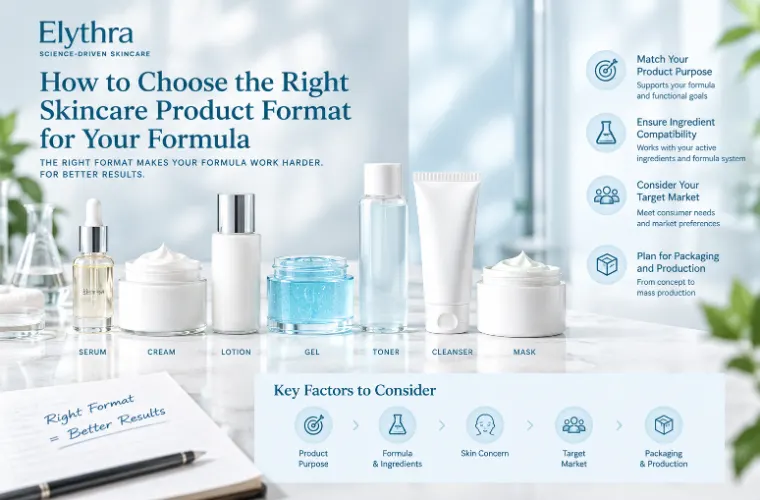
When developing a skincare product, the formula is only one part of the decision.
The product format also affects:
- Consumer experience
- Texture
- Packaging
- Product positioning
- Usage
- Manufacturing
- Product-line architecture
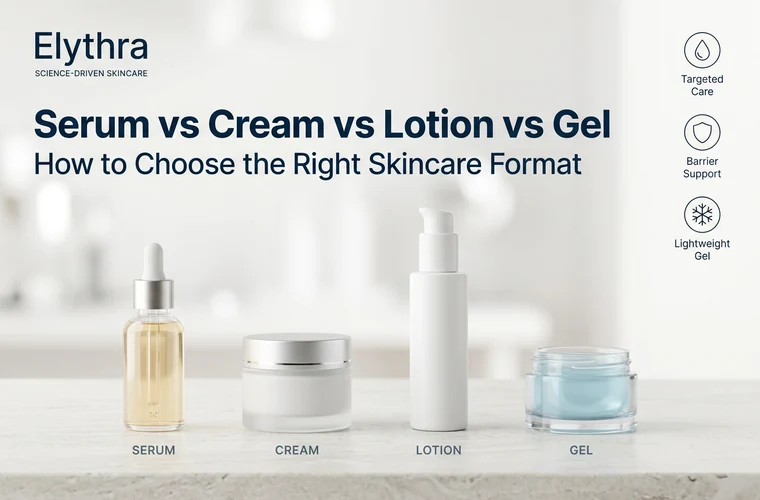
Two of the most common functional skincare formats are Serums and Creams.
So which one should your brand choose?
The answer depends on the product concept.
What Is a Serum Best Suited For?
Serums are commonly associated with:
- Lightweight textures
- Active-focused positioning
- Targeted skincare
- Layering
- Concentrated product concepts
They are often used as hero products because the format naturally supports an active-ingredient story.
What Is a Cream Best Suited For?
Creams are often associated with:
- Moisturization
- Conditioning
- Daily care
- Richer sensory experiences
- Treatment routines
Creams can also be positioned as hero products, particularly in premium and professional skincare.
Serum vs Cream
| Factor | Serum | Cream |
|---|---|---|
| Texture | Generally lighter | Generally richer |
| Common Positioning | Active / targeted | Conditioning / daily care |
| Application | Layering | Final skincare step |
| Packaging | Dropper / pump | Jar / tube / airless |
| Sensory Experience | Lightweight | Richer |
| Hero Product Potential | High | High |
| Product-Line Role | Targeted treatment | Supporting / conditioning |
| Climate Consideration | Often easier for warm climates | Depends on texture |
These are general positioning patterns rather than absolute rules.
When Should You Choose a Serum?
A serum can make sense when:
The Product Has a Strong Active Story
For example:
- Brightening
- Firming
- Antioxidant
- Targeted skincare
The Consumer Wants Lightweight Texture
This is often relevant for DTC and warm-climate markets.
The Product Is a Hero SKU
Serums are often used as high-visibility products.
When Should You Choose a Cream?
A cream may make more sense when:
Conditioning Is Important
For example:
- Barrier-focused care
- Daily moisturization
- Firming routines
The Product Is Used at Night
A richer format may support an overnight product concept.
The Product Is Part of a Professional Care Routine
Cream formats can work well within broader treatment and conditioning programs.
Serum and Cream Can Work Together
The choice does not have to be serum or cream.
A brand can develop both as complementary products.
For example:
Brightening Line
Brightening Serum → Brightening Treatment Mask
Firming Line
Firming Serum → Advanced Active Firming Cream
Post-Procedure Line
Recovery Serum → Barrier Cream
This creates a broader routine. The active systems behind these lines are covered in peptides, vitamin C and ceramides.
Format and Target Market
Product format should also consider climate and consumer preferences.
For example:
Warm Climate
Lighter serum or lotion textures may be attractive.
Dry Climate
Richer cream formats may have stronger positioning.
Professional Channel
A combination of serum and cream may fit a multi-step routine.
DTC
A lightweight hero serum can be easier to communicate and layer.
These are strategic considerations rather than fixed rules. Market-specific expectations are illustrated by Middle East and Southeast Asia.
Packaging Differences
Serums may commonly use:
- Droppers
- Pumps
- Airless bottles
Creams may use:
- Jars
- Tubes
- Airless containers
The actual choice depends on formula, viscosity, stability, consumer experience and product positioning. The decision framework is set out in how to choose skincare packaging.
Manufacturing Considerations
Serums and creams can have different production characteristics.
The manufacturer may need to consider:
- Mixing process
- Viscosity
- Filling
- Homogenization
- Container compatibility
- Production equipment
This is another reason product format should be defined early in development.
How the Format Changes Your Product Line
A strong skincare line does not need ten different products.
A focused range may include:
This can create a simple routine while covering different consumer needs.
Our 400-formula portfolio includes multiple formats that can be combined into broader product lines according to the target market and Solution.
How Elythra Beauty Approaches Product Format
Product format is considered alongside:
The goal is to select the format that supports the product concept rather than selecting a format first and forcing the formula around it.
Final Takeaway
Serum and cream are not competing formats.
They serve different roles.
The right choice depends on:
For many brands, the strongest strategy is to use both formats within a coordinated product line. If you are still choosing the development model itself, stock formula vs custom formula covers that decision.
Ready to Develop Your Skincare Line?
Share your product concept, target market and estimated quantity. Our team reviews your brief and comes back with a formulation and production proposal.