Skincare Product Development for Middle East & GCC Markets
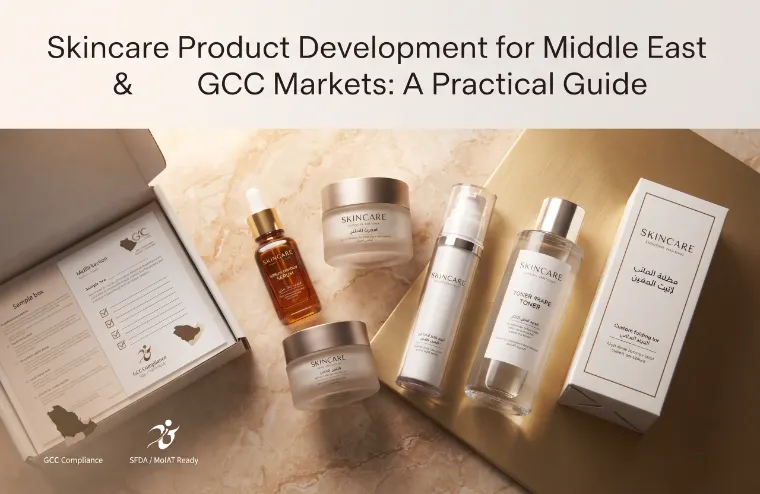
The Middle East is not a single regulatory market.
A skincare brand may target Saudi Arabia, the United Arab Emirates, Kuwait, Qatar, Bahrain or Oman, and each destination may have its own procedures, authorities and market-entry requirements.
At the same time, GCC markets share technical frameworks and product categories that can be relevant to cosmetics development.
For an overseas beauty brand, the most useful approach is to consider the target market during product development, rather than waiting until the formula and packaging are already finished.
This article is a product-development overview, not legal advice. Requirements can change and should be verified for the specific destination country, product and final formula before launch.
Start With the Target Country
The first question should not simply be:
“Is this product suitable for the Middle East?”
The more useful question is: Which country is the product intended for?
A project targeting Saudi Arabia may require a different registration and documentation workflow from a product targeting Dubai or another Gulf market.
Product Development for the Middle East
Before selecting the formula, define:
Target Consumer
Who will buy the product?
Product Positioning
Is it mass market, premium, professional, clinical-inspired, DTC or distributor-led?
Sales Channel
Will it be sold through retail, e-commerce, distribution, professional channels or clinics and beauty businesses?
Climate and Consumer Experience
Texture and packaging may also need to suit the target market and usage environment. Lightweight formats are often relevant in warmer climates, as discussed in serum vs cream.
Product Categories for Middle East Brands
Functional skincare can be developed around several product opportunities.
Pigment & Brightening
Products positioned around radiance, uneven-looking skin tone, dark spot care and daily brightening.
Firming & Anti-Aging
Products designed around firming-focused care, skin conditioning, antioxidant support and advanced skincare.
Post-Procedure Care
Products designed for soothing, barrier support, recovery-focused routines and daily protection.
Hair & Scalp Care
Products focused on scalp care, hair strengthening and hair-care routines.
Transdermal Delivery
Products designed around delivery-focused formats such as microneedling, spicule and skinbooster systems.
These solution areas map to the formats in our product portfolio.
Ingredient Considerations
Ingredients should be reviewed according to the destination market and the final product category.
Saudi Arabia’s current cosmetics guidance references technical requirements including SFDA.CO/GSO 1943, GSO 2528, ISO/IEC 22716 and SFDA requirements related to cosmetic ingredients, claims and product listing.
This means a product-development team should not assume that an ingredient strategy prepared for another market can automatically be transferred to Saudi Arabia without review.
The final formula should be checked against the applicable ingredient restrictions, concentration requirements and market-specific conditions.
Claims Need Careful Review
Claims are especially important for functional skincare.
A claim such as:
“Helps improve the appearance of uneven skin tone”
may have a different regulatory context from:
“Treats melasma.”
Similarly, terms involving acne treatment, hair growth, anti-inflammatory effects, medical claims and post-procedure treatment should be reviewed carefully against the final product classification and target market.
Saudi Arabia’s official guidance references both cosmetic safety requirements and the GCC claims standard GSO 2528.
Saudi Arabia: Product Listing and Documentation
Saudi Arabia’s current SFDA service information shows that cosmetic products are handled through the Ghad system, with product information and manufacturer details forming part of the submission process.
SFDA’s published guidance also identifies documentation such as product artwork and label information and ingredient information, depending on the application.
For manufacturers and importers, the exact documentation and responsibilities should be confirmed according to the product and business structure.
The key point for product development is: do not wait until the final artwork stage to consider the destination-market requirements.
United Arab Emirates: Product and Packaging Requirements
The UAE also applies requirements to cosmetics and personal-care products.
The UAE Ministry of Industry and Advanced Technology has published a conformity-certification framework for cosmetics referencing Gulf standards including UAE.S GSO 1943, with requirements that can include product testing, formula declaration, packaging and label information, safety-related documentation and other supporting materials.
Dubai Municipality also operates a product-registration system, Montaji, for consumer products including cosmetics and personal-care products, and provides services connected with product registration, imported-consignment release and related product controls.
This reinforces the value of preparing the product specification and documentation package early.
Packaging and Labeling
Packaging needs to be considered as part of product development.
Review:
- Product name
- Net quantity
- Ingredient declaration
- Manufacturer information
- Responsible parties
- Directions
- Warnings
- Claims
- Country-of-origin information where applicable
The exact requirements depend on the destination country and the final product. For example, UAE technical requirements reference GCC safety and labeling standards, while Saudi Arabia has its own SFDA procedures and requirements.
Artwork-related decisions are covered more broadly in how to choose skincare packaging.
Halal Considerations
For brands targeting Muslim-majority markets or buyers who specifically require Halal positioning, Halal considerations may need to be incorporated into supplier selection, ingredient review, manufacturing documentation and certification strategy.
Do not assume that a product is automatically “Halal” simply because it is manufactured in China.
If Halal certification is required by the buyer or destination market, the specific certification route and documentation should be confirmed before production.
Product Documentation
Depending on the market and product, documentation may include:
- Formula information
- Ingredient declarations
- Product specifications
- Certificate of Analysis
- Safety-related documentation
- Testing reports
- Manufacturer information
- Free-sale documentation where applicable
- Artwork and label information
- GMP-related information
The exact documentation package should be established during project planning. What a supplier can actually provide is one of the evaluation points in how to audit a skincare OEM manufacturer in China.
Choosing the Right Product Strategy
A Middle East product launch does not need to begin with ten SKUs.
A brand may start with:
Hero Product
Brightening Serum
Supporting Product
Brightening Cream
Daily Product
Cleanser
This can create a focused product line while keeping initial production manageable.
OEM/ODM Development for Middle East Brands
A market-specific development project can follow:
The target country should be identified early.
This gives the formulation and packaging teams a better opportunity to identify relevant requirements before the product is finalized.
How Elythra Beauty Supports Middle East Projects
Elythra Beauty works with international brands on:
For Middle East-focused projects, the development brief can include:
- Target GCC country
- Product concept
- Target consumer
- Product format
- Preferred ingredients
- Packaging requirements
- Documentation needs
- Launch timeline
The final regulatory pathway should always be confirmed according to the destination country and final product specification. You can read more about the Middle East market we serve.
A Practical Middle East Product Development Checklist
Before starting your project, prepare:
This gives the OEM/ODM partner enough information to begin a meaningful project discussion.
Common Mistakes When Developing for the Middle East
Treating the Middle East as One Regulatory Market
Different countries have different procedures.
Finalizing Claims Too Early
Claims should be reviewed against the final formula and target destination.
Ignoring Packaging Requirements
Labeling and product information should be considered early.
Assuming Existing Documentation Is Enough
Documentation requirements can depend on the destination market.
Waiting Until Import to Review Compliance
Market requirements should be incorporated during product development.
Final Takeaway
Successful skincare development for Middle East and GCC markets starts with the target country, not after the product is finished.
The development process should connect:
This gives brands a more structured path from concept to market launch. The earlier the market is defined, the easier it is to prepare the requirements that support it, which is also the starting point of a well-structured brief in how to prepare a skincare product brief.
Ready to Develop Your Skincare Line?
Share your product concept, target market and estimated quantity. Our team reviews your brief and comes back with a formulation and production proposal.