
Skincare Stability Testing: What Brands Need to Know Before Launch
A skincare formula may look excellent when it is first developed.
But a commercial product needs to remain consistent during storage, transportation and normal use.
That is why stability evaluation is an important part of skincare product development.
For brands working with an OEM/ODM manufacturer, understanding stability testing can help them make better decisions before moving into mass production.
What Is Stability Testing?
Stability testing evaluates whether a product maintains its intended characteristics over time under defined conditions.
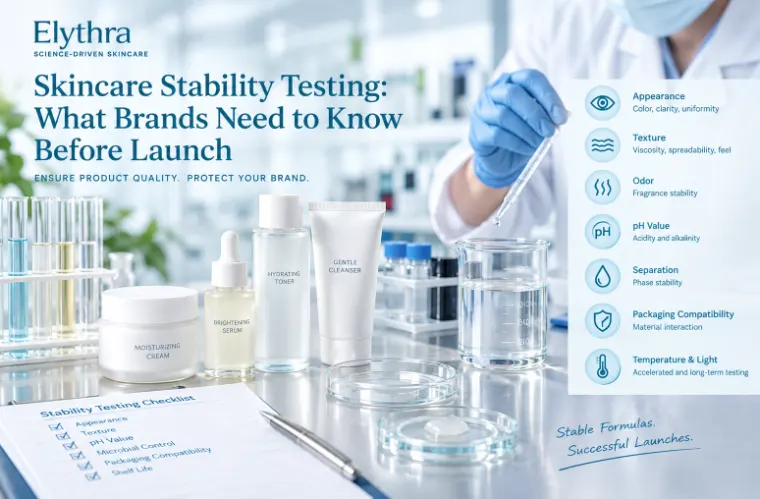
Depending on the product, evaluation may include:
- Appearance
- Color
- Odor
- Texture
- pH
- Viscosity
- Formula consistency
- Packaging compatibility
The exact testing program depends on the product and development requirements – formulas built around sensitive actives need particular attention, as covered in active ingredient selection.
Why Is Stability Important?
A product can change for many reasons.
Temperature, light, oxygen, packaging interaction and formula composition can all affect product performance.
Potential changes may include:
- Color change
- Odor change
- Separation
- Texture change
- Viscosity change
- pH shift
These changes can affect both consumer experience and product quality.
Formula Stability and Packaging Compatibility
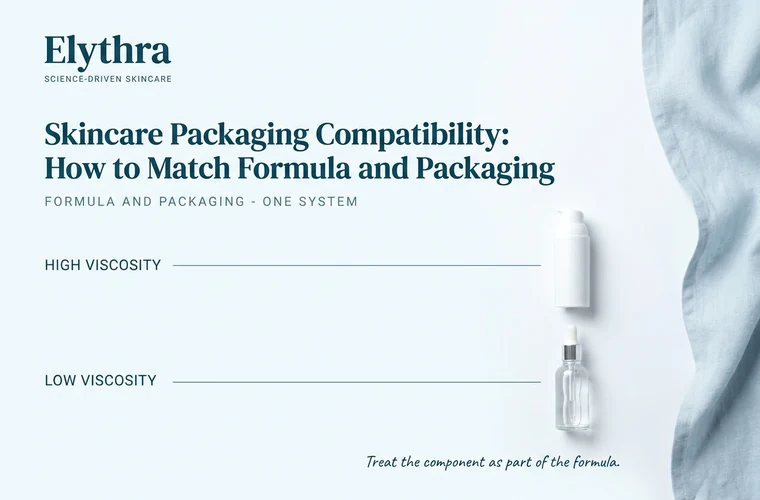
Formula and packaging should be evaluated together.
For example, packaging can influence exposure to:
- Air
- Light
- Environmental conditions
The formula may also interact with packaging materials.
Therefore, packaging selection should not be treated as an entirely separate stage from formulation – the trade-offs are set out in stock packaging vs custom packaging.
What Should Brands Ask Their OEM Partner?
Before approving a formula, brands can ask:
- What stability testing is planned?
- What characteristics are being monitored?
- Has the final packaging been evaluated?
- What happens if the formula changes during testing?
- When is the formula considered ready for production?
Clear communication at this stage can prevent avoidable problems later.
When Should Stability Evaluation Begin?
Stability evaluation should be considered during product development rather than after commercial production has already started.
A typical development sequence is:
The exact process varies according to the product and project.
Final Thoughts
Stability is not simply a laboratory issue.
It connects formula development, packaging, quality control and commercial production.
For brands developing skincare products through OEM/ODM manufacturing, stability evaluation should be part of the product-development plan from the beginning – alongside microbial testing and the wider OEM/ODM manufacturing process.
Ready to Develop Your Skincare Line?
Share your product concept, target market and estimated quantity. Our team reviews your brief and comes back with a formulation and production proposal.