
How to Source Custom Skincare Packaging in China
China has a broad packaging supply chain serving the beauty and personal-care industry.
For overseas skincare brands, sourcing packaging from China can provide access to a wide range of formats, materials and decoration options.
But successful packaging sourcing requires more than finding a supplier with attractive products.
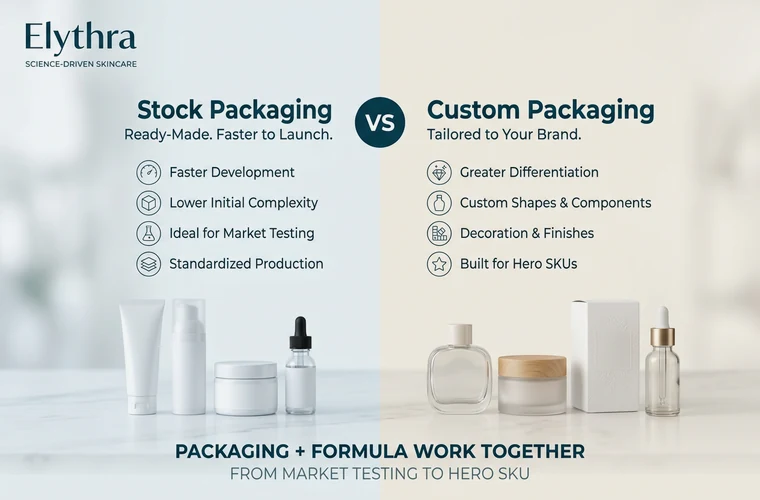
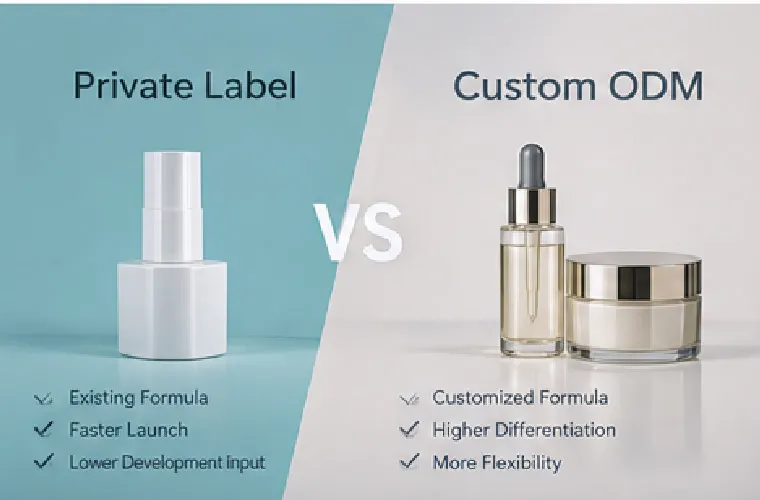
If you are still deciding between ready-made and fully customised components, start with stock packaging vs custom packaging.
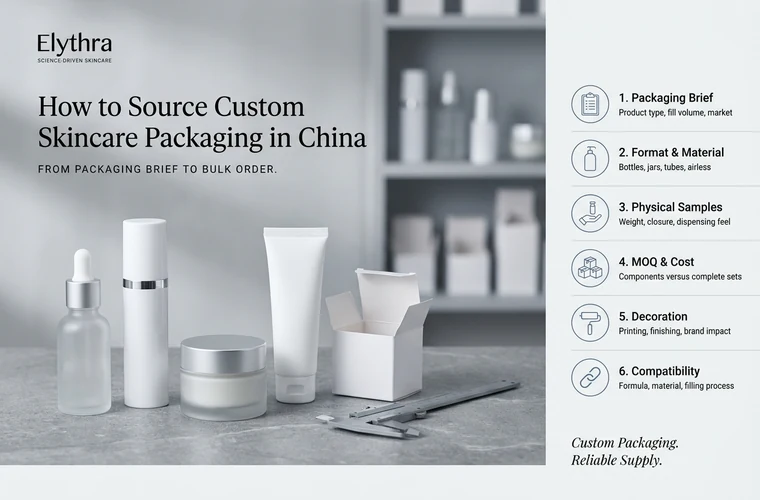
01 Define Your Packaging Requirements
Before contacting suppliers, prepare a basic packaging brief.
Include:
- Product type
- Formula format
- Fill volume
- Packaging format
- Target market
- Brand positioning
- Quantity
- Decoration requirements
- Target launch date
The clearer the brief, the easier it is for suppliers to provide relevant options – the same discipline that applies to preparing a skincare product brief.
02 Choose the Packaging Format
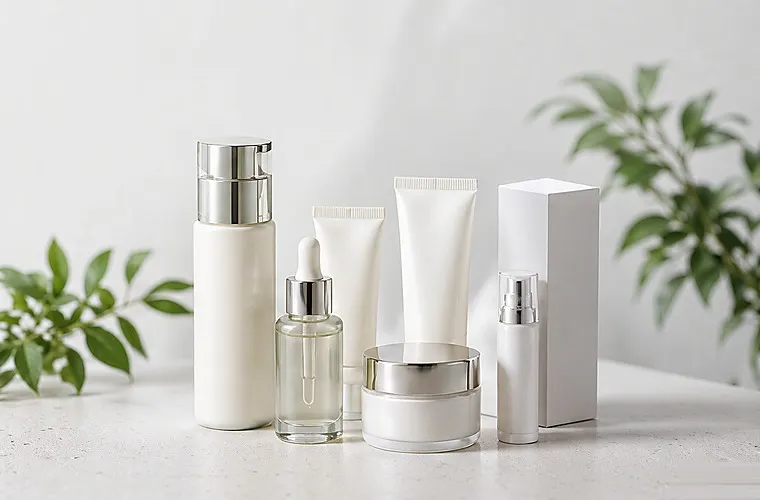
Common skincare formats include:
- Bottles
- Dropper bottles
- Airless bottles
- Jars
- Tubes
- Pumps
- Spray bottles
The format should be selected according to both the product concept and formula requirements.
03 Request Packaging Samples
Never evaluate packaging only from photographs.
Request physical samples whenever practical.
Evaluate:
- Material
- Weight
- Appearance
- Closure
- Pump performance
- Dispensing
- Surface finish
- Overall brand impression
04 Check MOQ
Packaging MOQ can be different from skincare formula MOQ.
Ask suppliers to clarify:
Is the MOQ based on components, complete packaging sets or finished units?
This becomes particularly important for new brands – see the skincare OEM MOQ guide for how MOQ behaves across a project.
05 Evaluate Decoration
Packaging decoration can include different printing and finishing options.
The appropriate choice depends on:
- Material
- Quantity
- Design
- Budget
- Brand positioning
A simple packaging structure with high-quality decoration can sometimes create a stronger result than an unnecessarily complex package.
06 Check Formula Compatibility
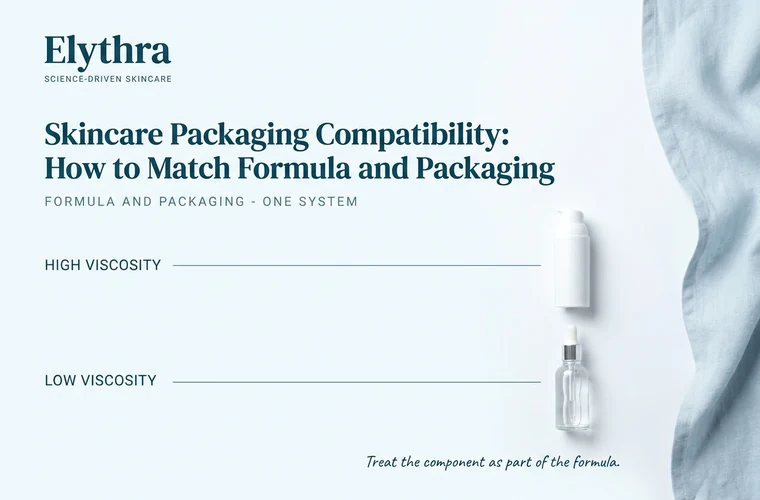
Packaging and formula need to be considered together.
Potential factors include:
- Formula viscosity
- Dispensing mechanism
- Material compatibility
- Product exposure
- Filling process
Packaging should therefore be evaluated before final formula approval whenever possible – it is one of the compatibility questions that stability testing is designed to surface.
07 Coordinate Packaging With OEM Production
One important sourcing decision is:
Should the brand source packaging separately or through the skincare manufacturer?
Working through separate suppliers may provide more direct packaging control.
Working through an OEM/ODM manufacturer can simplify coordination between:
The right approach depends on the project.
08 Confirm Production Specifications
Before placing a packaging order, confirm:
- Dimensions
- Materials
- Capacity
- Decoration
- Color
- Components
- Tolerances
- Packaging method
Written specifications reduce misunderstandings during production.
09 Plan for Lead Time
Packaging can become a critical path in a skincare launch.
A product cannot enter final production if required packaging components are not ready.
Therefore, packaging sourcing should be planned together with:
Final Thoughts
Successful skincare packaging sourcing requires more than finding attractive packaging at a competitive price.
The packaging needs to work with the formula, production process, brand positioning and launch timeline.
For brands sourcing skincare from China, integrated formula and packaging coordination can simplify the path from concept to finished product – the wider context is covered in choosing a skincare OEM manufacturer in China and auditing an OEM factory before production.
Ready to Develop Your Skincare Line?
Share your product concept, target market and estimated quantity. Our team reviews your brief and comes back with a formulation and production proposal.