Skincare OEM MOQ: A Complete Guide for New Brands
Starting a skincare brand often begins with a simple question:
How many units do I need to order?
Minimum Order Quantity, commonly referred to as MOQ, is one of the first commercial considerations when working with a skincare OEM or ODM manufacturer. It affects your initial investment, packaging decisions, production planning and ability to test a new product in the market.
However, MOQ is not a single number that applies to every skincare product.
The minimum quantity can vary depending on the formula, packaging, customization level, production process and project requirements.
This guide explains how skincare OEM MOQ works and what brands should consider before starting a new product project.
What Does MOQ Mean in Skincare OEM?
MOQ means Minimum Order Quantity.
In skincare manufacturing, it refers to the minimum quantity a manufacturer requires for a particular production project.
For example, a manufacturer may have one MOQ for an established formula with standard packaging and a different MOQ for a fully customized product requiring new formula development, custom packaging and additional production setup.
MOQ is therefore better understood as a project-specific production requirement, rather than a universal industry number.
Why Do Skincare Manufacturers Set an MOQ?
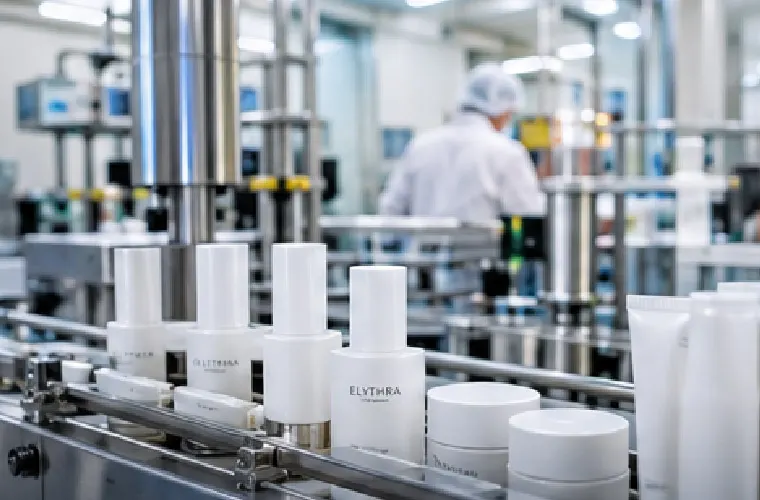
Manufacturing a skincare product involves more than filling product into containers.
A typical production project may involve:
- Raw material purchasing
- Formula preparation
- Mixing and homogenization
- Filling
- Packaging components
- Labels and artwork
- Production setup
- Quality control
- Testing
- Warehouse handling
- Finished-product packaging
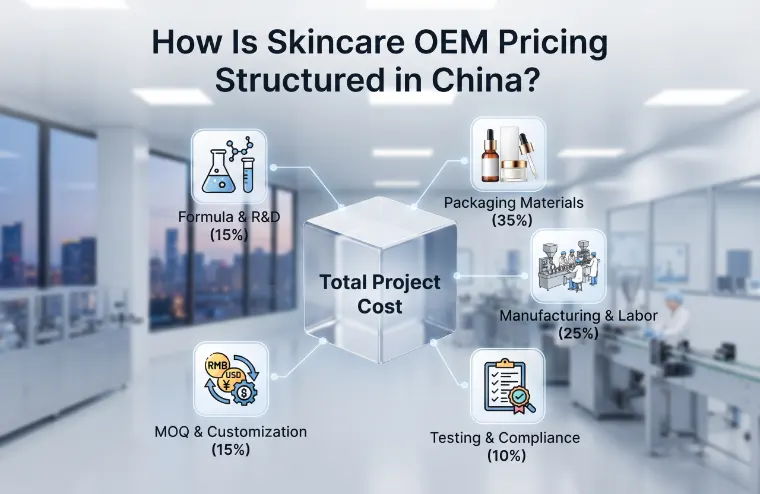
Small production quantities can create relatively high setup and handling costs compared with larger production runs.
MOQ helps manufacturers organize these production requirements more efficiently.
For buyers, understanding this relationship is important because a lower MOQ is not automatically better if it comes with higher unit costs, limited packaging options or reduced customization.
What Factors Affect Skincare OEM MOQ?
Several factors can influence MOQ.
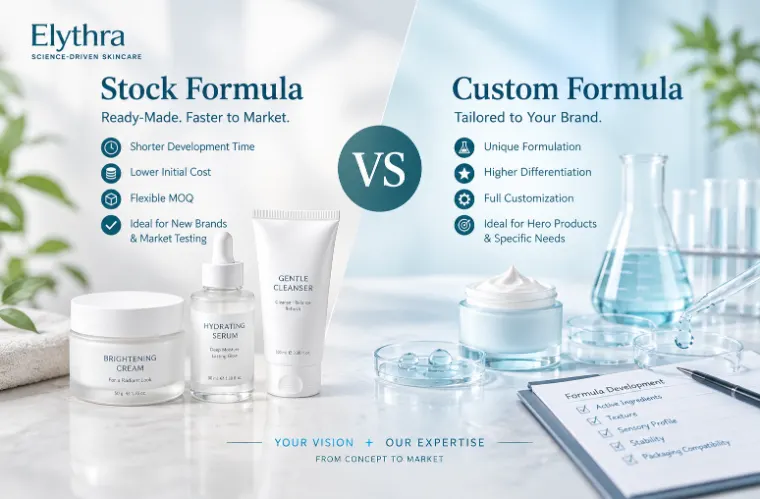
1. Formula Type
Established formulas and custom-developed formulas may have different production requirements.
A ready formula that has already been developed and validated can generally be easier to manufacture than a new formula that requires additional development, testing and production preparation.
For this reason, private label projects may have a different MOQ structure from fully customized ODM projects.
2. Product Format
The manufacturing process can vary significantly between different product formats.
Examples include:
- Serums
- Creams
- Lotions
- Cleansers
- Masks
- Shampoos
- Ampoules
- Specialty treatment formats
The equipment, filling process and packaging components required for each format can affect production planning.
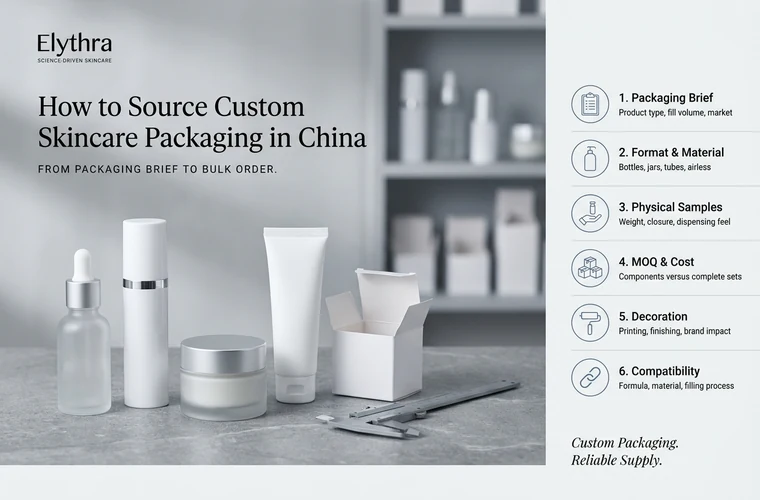
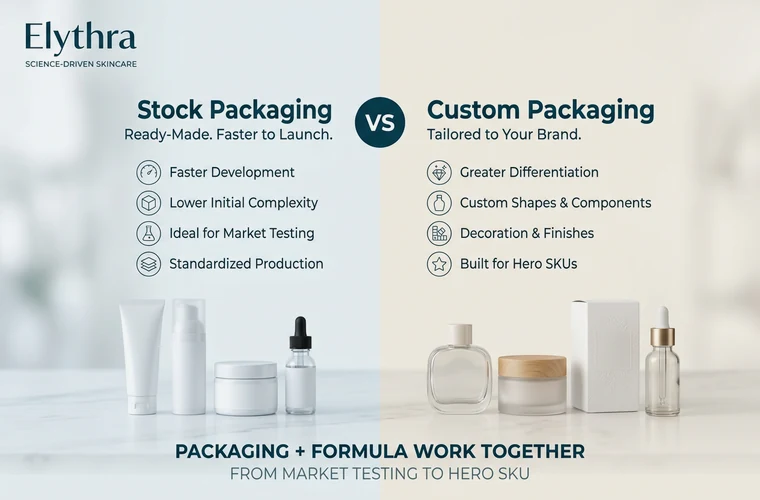
3. Packaging
Packaging is often one of the biggest factors affecting MOQ.
A standard bottle that is already available from a packaging supplier may be easier to use for a smaller project.
By contrast, custom packaging may require:
- Custom molds
- Special decoration
- Minimum packaging quantities
- Custom colors
- Printing setup
- Additional component sourcing
This means a product may have one MOQ for standard packaging and another for fully customized packaging.
4. Formula Customization
The more customized the formula, the more development work may be required before production.
Examples include:
- Changing the active ingredient system
- Adjusting texture
- Modifying fragrance
- Changing sensory characteristics
- Developing a benchmark formula
- Developing a new product concept
A custom formula should therefore be evaluated based on the complete development project rather than only the finished-product quantity.
5. Product Positioning
A simple daily cleanser and a highly specialized treatment product may require very different development approaches.
The product’s target consumer, format, active system, packaging and market positioning can all influence the project structure.
Private Label MOQ vs Custom ODM MOQ
One of the most useful distinctions for new brands is the difference between Private Label and Custom ODM. The wider comparison between the two development models is covered in our private label vs custom ODM guide.
Private Label
Private label typically starts from an established formula concept.
The brand may customize:
- Brand name
- Packaging
- Label design
- Product presentation
- Selected specifications
This can provide a faster starting point and may offer more flexible quantities for selected formulas.
At Elythra Beauty, selected established formulas may be available from 200 units, depending on the formula, packaging and project requirements.
This should be treated as a starting reference rather than a universal MOQ for every product.
Custom ODM
Custom ODM involves deeper product development.
A project may include:
- Formula development
- Ingredient selection
- Texture development
- Benchmark development
- Product testing
- Customized packaging
- Production setup
Because the development and production requirements are more complex, MOQ needs to be evaluated on a project-by-project basis. Selecting the right supplier for that evaluation is covered in our guide to choosing a skincare OEM manufacturer in China.
Can New Brands Start With a Lower MOQ?
In some cases, yes.
A more focused first launch can make sense when a brand wants to:
- Test a new product concept
- Enter a new market
- Validate consumer demand
- Launch a small product range
- Test different sales channels
However, the lowest possible MOQ should not always be the only objective.
A better question is:
What production quantity gives us a reasonable balance between market testing, unit economics and future scalability?
How Should a New Brand Choose Its First MOQ?
Consider five factors.
Market Size
How large is your initial target market?
Sales Channel
Are you selling through:
- DTC
- E-commerce
- Retail
- Distribution
- Professional channels?
Launch Strategy
Are you testing one hero product or launching a complete line?
Packaging
Are you using standard packaging or custom-developed packaging?
Growth Plan
Can the manufacturer support higher production volumes later?
A good OEM partner should be able to discuss both the initial production run and the scaling path. Our complete guide to skincare OEM/ODM manufacturing explains how the wider development process fits together.
Questions to Ask a Skincare OEM Manufacturer About MOQ
Before placing an order, ask:
- Is the MOQ based on the formula or the finished product?
- Does packaging have a separate MOQ?
- Is the MOQ different for private label and custom ODM?
- Can I start with a smaller quantity for market testing?
- Does changing packaging affect the MOQ?
- Does changing the formula affect the MOQ?
- What happens when I reorder?
These questions can reveal much more than simply asking:
“What is your MOQ?”
MOQ Should Be Part of Your Product Strategy
For a new skincare brand, MOQ should be considered together with:
Instead of selecting the lowest possible quantity first, build a production plan that matches your actual market-entry strategy. The commercial side of that plan is covered in our skincare product development cost guide.
How Elythra Beauty Approaches MOQ
Elythra Beauty supports both established formula projects and more customized OEM/ODM development.
For selected formulas, brands may be able to start with more flexible production quantities. Custom projects are evaluated based on the formula, packaging, customization level and production requirements.
This allows brands to choose between:
Final Takeaway
Skincare OEM MOQ is not simply a number on a quotation.
It is connected to:
Understanding these factors before development can help you plan your first launch more effectively and avoid unexpected production constraints.
If you already have a product concept, benchmark or target quantity, the best next step is to discuss the complete project rather than MOQ alone. You can request a project-specific quote or review our OEM/ODM development services.
Ready to Develop Your Skincare Line?
Share your product concept, target market and estimated quantity. Our team reviews your brief and comes back with a formulation and production proposal.