
How to Choose Skincare Packaging for Private Label and Custom ODM
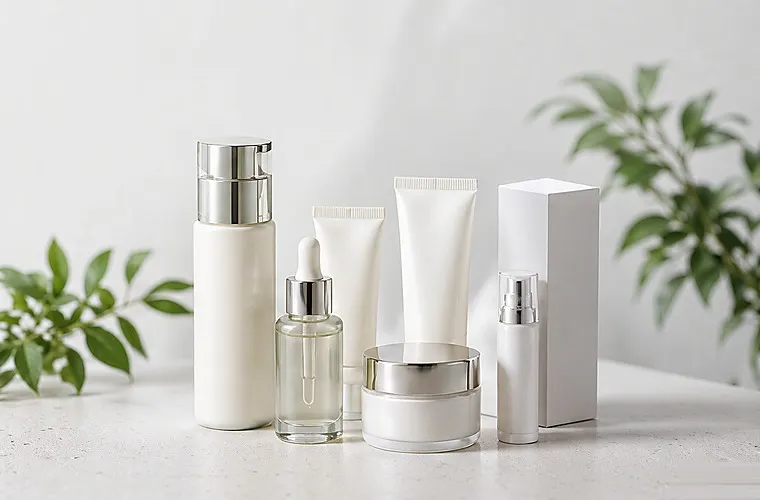
Packaging is one of the first things consumers notice about a skincare product.
For a B2B beauty brand, however, packaging is more than visual presentation.
It also affects:
- Formula compatibility
- Product protection
- Filling
- MOQ
- Cost
- Shipping
- Consumer experience
- Brand positioning
A good packaging choice therefore needs to balance function, appearance, cost and production feasibility.
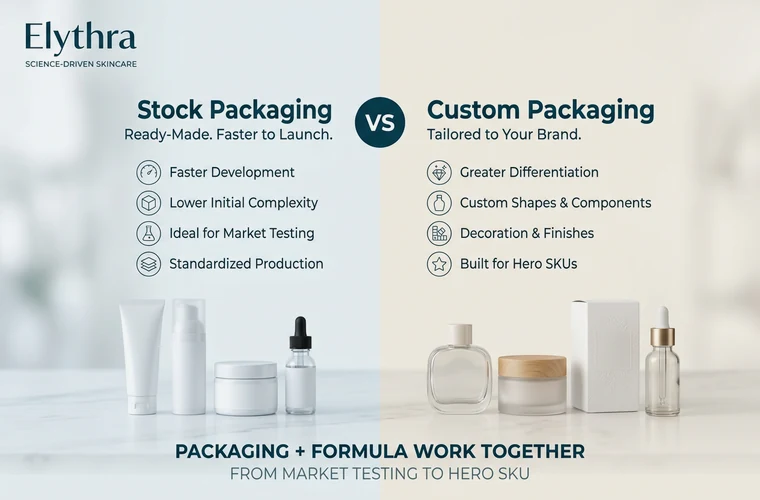
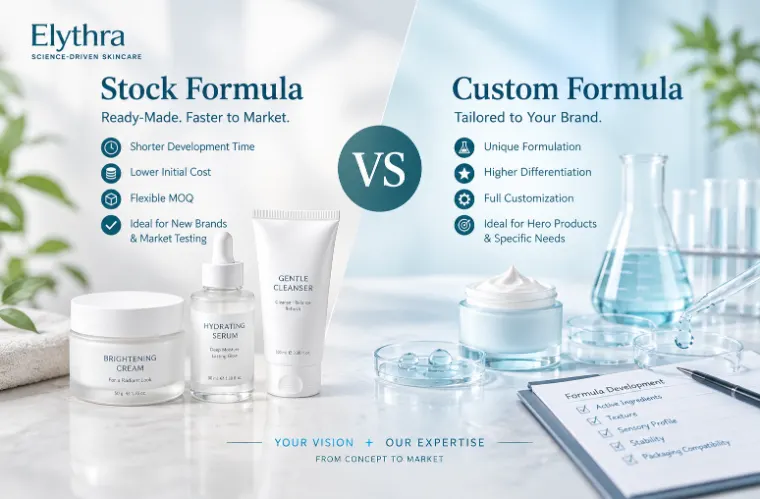
Stock Packaging vs Custom Packaging
One of the first decisions is whether to use stock packaging or develop something more customized.
Stock Packaging
Stock packaging is already available from a supplier or manufacturer.
Advantages may include:
- Faster sourcing
- Lower development complexity
- More flexible starting quantities
- Easier replacement
- Established manufacturing process
This can be practical for new brands or market testing.
Custom Packaging
Custom packaging can help create stronger visual differentiation.
It may involve:
- Custom shape
- Custom color
- Custom decoration
- Custom mold
- Special closures
- Custom components
Custom packaging generally requires more planning and may involve higher minimum quantities or development costs.
Match Packaging to the Product Format
Different product formats often require different packaging approaches.
Serum
Common options include:
- Dropper bottles
- Pumps
- Airless systems
Cream
Common options include:
- Jars
- Tubes
- Airless pumps
Cleanser
Common options include:
- Pumps
- Squeeze tubes
- Bottles
Shampoo
Common options include:
- Bottles
- Pumps
- Tubes
Mask
Packaging can include:
- Jars
- Tubes
- Single-use formats
- Sachets
The best choice depends on the formula, product positioning and consumer experience. Which format suits which product concept is compared in serum vs cream.
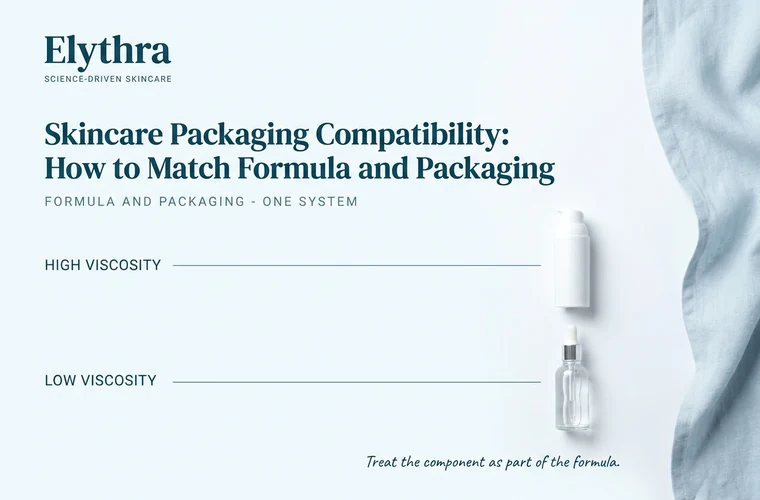
Formula–Packaging Compatibility
This is one of the most important technical considerations.
A package should not be selected solely because it looks good.
The development team should consider:
- Formula viscosity
- Ingredient sensitivity
- Air exposure
- Light sensitivity
- Dispensing
- Material compatibility
- Closure performance
For example, certain formulas may require packaging that provides greater protection from light or air.
The formula and package should therefore be evaluated as a system.
Packaging and User Experience
Packaging affects how consumers experience the product.
Compare:
Each creates a different consumer experience.
Consider:
- Ease of use
- Product control
- Dispensing
- Travel convenience
- Premium perception
- Hygiene
- Product waste
The right packaging should match both the formula and product positioning.
Packaging and Brand Positioning
Packaging should reinforce the brand identity.
Premium
Materials and decoration may emphasize luxury.
Clinical-Inspired
Clean shapes and controlled graphics may communicate a technical image.
Natural
Material selection and visual language may emphasize simplicity.
Professional
Functional, efficient packaging may be more appropriate.
Do not choose packaging independently of your target consumer.
How Packaging Affects MOQ
Packaging can have its own MOQ.
For example:
- Stock Bottle may have a more flexible starting quantity.
- Custom Bottle may require larger quantities.
Custom decoration may also require minimum production quantities.
Therefore, when planning your MOQ, consider:
These may not always be the same. How MOQ is set at project level is explained in our skincare OEM MOQ guide.
Packaging and Project Cost
Packaging cost can include:
- Container
- Pump or dropper
- Cap
- Label
- Box
- Decoration
- Printing
- Custom mold
- Assembly
A more expensive package does not necessarily create more product value.
The goal is to find the appropriate balance between:
Packaging Artwork and Labeling
Artwork should be finalized after the product specifications are sufficiently confirmed.
Relevant information may include:
- Product name
- Net quantity
- Ingredient list
- Directions
- Warnings
- Brand information
- Regulatory information
Requirements vary by destination market, so packaging artwork should be reviewed according to the intended market and final product. Regional differences are illustrated in skincare product development for Middle East & GCC markets.
Packaging Sustainability
Brands may also consider:
- Recycled materials
- Recyclable components
- Reduced packaging
- Refillable concepts
- Material selection
- Shipping efficiency
However, sustainability claims should be supported by the actual packaging materials and supply chain.
Avoid using broad claims such as “eco-friendly” without understanding what the packaging actually contains and how it can be handled after use.
Questions to Ask Your OEM Manufacturer
Before selecting packaging, ask:
- Is this package compatible with my formula?
- What is the MOQ?
- Is the packaging stock or custom?
- What is the lead time?
- Can the manufacturer handle filling and assembly?
- Can the package be customized?
- What decoration options are available?
- Can I request a packaging sample?
- Has this package been used with similar formulas?
These questions can prevent costly changes later.
A Practical Packaging Selection Process
How Elythra Beauty Supports Packaging Development
Packaging can be considered together with:
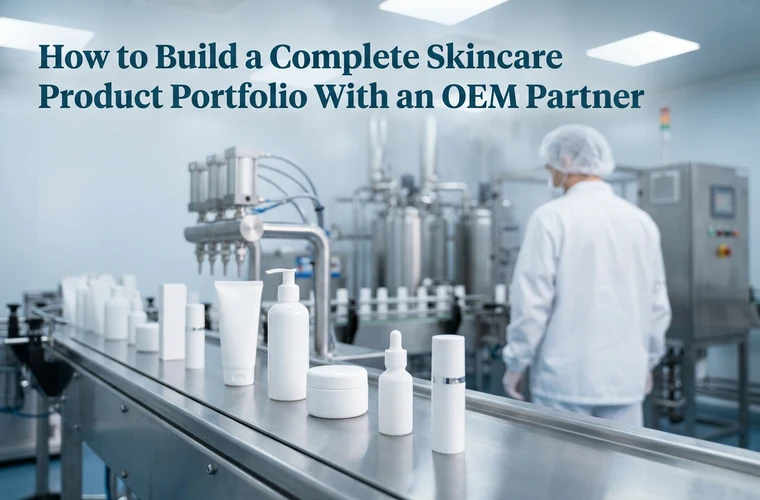
Rather than managing formula and packaging as two unrelated projects, brands can coordinate both within the same OEM/ODM development workflow.
You can review our product portfolio to see the packaging formats already in production across different categories.
Final Takeaway
The right skincare packaging is not simply the most attractive package.
It should balance:
When packaging decisions are made early and together with formulation development, the overall project can be easier to manage.
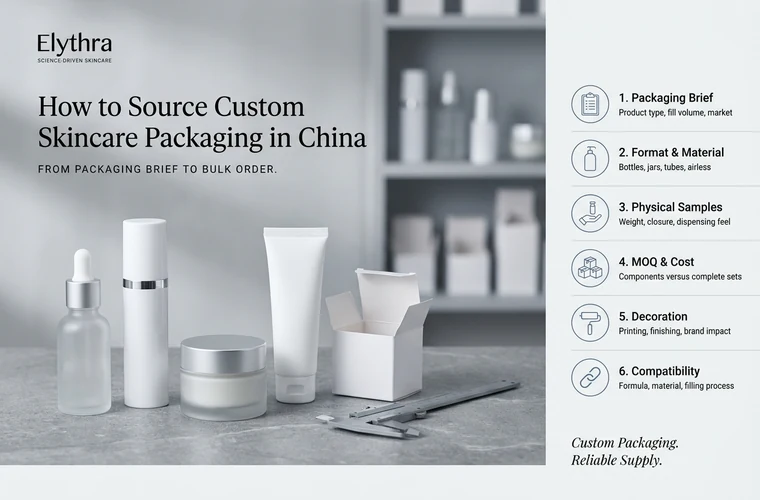
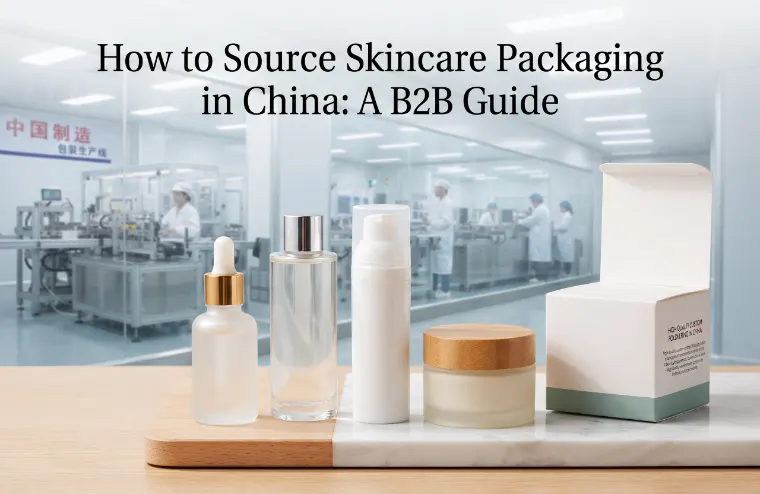
Sourcing options and supplier coordination are covered separately in how to source skincare packaging in China.
Ready to Develop Your Skincare Line?
Share your product concept, target market and estimated quantity. Our team reviews your brief and comes back with a formulation and production proposal.