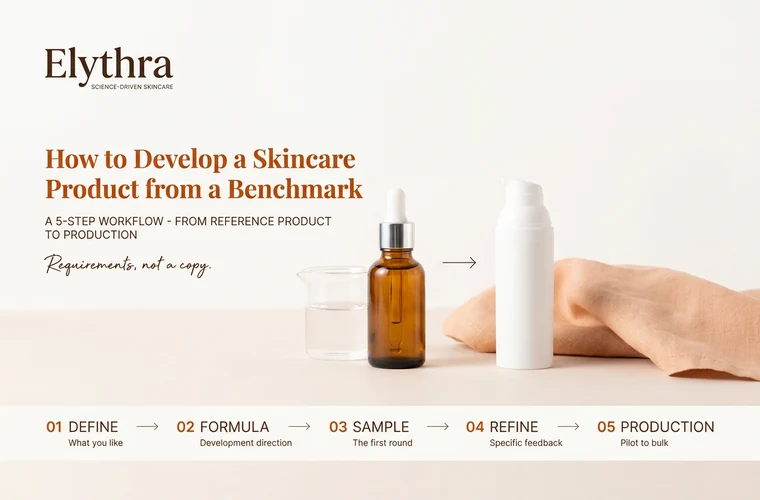

How to Develop a Skincare Product from a Benchmark
Many skincare brands do not start with a completely blank page.
Instead, they already have a product they like.
It may be a serum from a competing brand, a professional treatment product, a successful product sold in another market, or a sample with a texture and sensory profile they want to achieve.
This is where benchmark-based product development can be useful.
A benchmark gives an OEM/ODM manufacturer a practical reference for understanding what the brand is trying to create. However, developing a new product from a benchmark is not simply a matter of copying an existing formula.
A professional development process needs to evaluate the benchmark, define the product requirements, determine a suitable formulation direction and then develop a product that fits the brand’s own market and positioning.
What Is a Benchmark Product?
A benchmark is a product used as a reference during product development.
A benchmark may provide information about:
- Texture
- Appearance
- Application experience
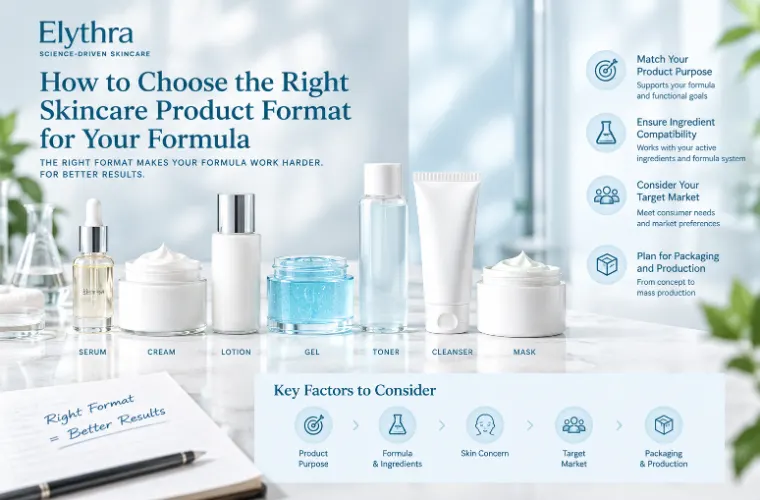
- Packaging format
- Product positioning
- Consumer experience
- Product format
- Ingredient direction
A brand may provide a physical sample, ingredient list, product photographs, packaging references or a combination of these.
The more information available, the easier it is for the development team to understand the intended product concept.
Why Do Brands Use Benchmark Development?
Benchmark development can be useful when a brand already knows what type of product it wants to create.
For example:
“We want a lightweight brightening serum with a similar texture and sensory experience to this reference product.”
This provides a much clearer starting point than:
“We need a brightening serum.”
A benchmark can help communicate expectations around the product experience before formulation development begins.
What Should You Provide to an OEM Manufacturer?
A good benchmark brief should contain as much useful information as possible.
1. The Benchmark Product
When possible, provide an actual product sample.
This allows the development team to evaluate:
- Texture
- Color
- Odor
- Spreadability
- Absorption
- Finish
- Packaging
2. Product Information
Provide the available:
- Product name
- Ingredient list
- Product claims
- Product format
- Net weight
- Packaging information
3. Your Own Requirements
The benchmark is only a reference.
Your product may need a different:
- Texture
- Ingredient direction
- Fragrance
- Packaging
- Product size
- Target price
- Market positioning
Benchmark Development Is Not Simple Copying
One of the most important points for brands to understand is that a benchmark is a reference point, not necessarily a formula to reproduce exactly.
A professional formulation process needs to consider:
A product that looks similar on the outside may require a completely different formulation approach.
Understanding the full development path is useful before a project begins. Our complete guide to skincare OEM/ODM manufacturing explains how these stages connect.
Step 1: Analyze the Benchmark
The first stage is to understand what makes the benchmark product distinctive.
The evaluation may include:
Texture
Is it:
- Water-like?
- Gel?
- Creamy?
- Rich?
- Lightweight?
- Fast-absorbing?
Sensory Profile
How does the product feel during and after application?
Appearance
Consider:
- Color
- Transparency
- Viscosity
- Finish
Packaging
Review:
- Bottle type
- Pump
- Dropper
- Jar
- Tube
- Closure
This information gives the development team a clearer product target.
Step 2: Define What Must Stay and What Can Change
Not every characteristic of a benchmark needs to be reproduced.
Divide the brief into:
Must Have
Features that define the product concept.
Preferred
Features that would improve the product but can be adjusted.
Flexible
Features that can change according to formula feasibility, cost or market requirements.
For example:
- Must Have: Lightweight serum texture
- Preferred: Fast absorption
- Flexible: Fragrance
This can make the development process more efficient.
Step 3: Define the Formula Direction
Once the benchmark is understood, the formulation team can identify an appropriate direction.
Depending on the product, this may include:
- Active ingredient systems
- Moisturizing systems
- Soothing systems
- Brightening systems
- Firming systems
- Antioxidant systems
- Cleansing systems
The final formula should be developed around the complete product brief rather than simply matching an ingredient list.
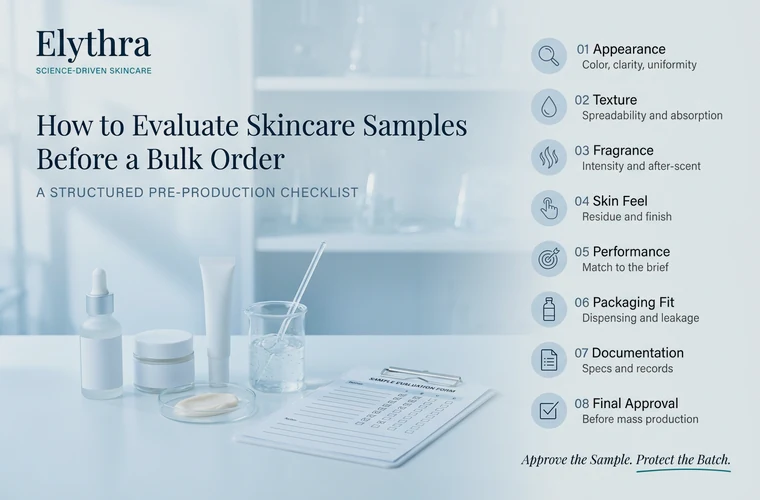
Step 4: Develop the First Sample
The first sample should be treated as a development version.
The purpose is not always to produce a final product immediately.
Instead, it provides a basis for evaluation.
The brand can assess:
- Texture
- Appearance
- Application experience
- Odor
- Packaging compatibility
- Overall product positioning
Step 5: Collect Structured Feedback
One of the biggest causes of inefficient sample development is vague feedback.
Avoid:
“It doesn’t feel right.”
Instead describe exactly what needs to change.
For example:
“The serum feels too rich and absorbs too slowly.”
or:
“The texture should be lighter and more suitable for a warm climate.”
or:
“The product needs a more cushion-like application feel.”
Specific feedback gives the R&D team a much clearer direction.
Step 6: Refine the Formula
Depending on the project, several rounds of adjustment may be required.
Potential adjustments include:
- Texture
- Viscosity
- Sensory profile
- Active ingredient direction
- Fragrance
- Color
- Packaging compatibility
The number of sample rounds depends on the complexity of the project.
Step 7: Evaluate Packaging Together With the Formula
Packaging should not be treated as a completely separate step.
The formula and packaging need to work together.
Consider:
- Product compatibility
- Dispensing
- Air exposure
- Container material
- Filling method
- Consumer experience
For example, a lightweight serum may work well with a dropper or pump, while a thicker cream may require a different dispensing solution.
Step 8: Testing and Production
Once the product direction is approved, the project can move toward:
At this stage, the goal is to confirm that the approved product can be produced consistently at commercial scale.
Benchmark Development Checklist
Before starting, prepare:
| Information | Recommended |
|---|---|
| Benchmark Sample | Yes |
| Ingredient List | If available |
| Product Photos | Yes |
| Packaging Reference | Recommended |
| Target Market | Yes |
| Target Consumer | Yes |
| Preferred Texture | Yes |
| Key Ingredients | If applicable |
| Target MOQ | Recommended |
| Target Launch Date | Recommended |
If MOQ is still unclear, our skincare OEM MOQ guide explains how production quantity is determined.
Common Mistakes in Benchmark Development
Asking for an Exact Copy
A benchmark should guide product development rather than replace technical development.
Giving Vague Feedback
Specific sensory feedback is much more useful.
Ignoring Packaging
A formula and its packaging should be evaluated together.
Discussing the Product Without Defining the Market
The same formula may require different positioning or documentation depending on the intended market.
How Elythra Beauty Approaches Benchmark Development
Elythra Beauty can work from:
The development process can then move from:
The objective is to create a product that fits the brand’s intended consumer, positioning and target market rather than simply reproducing the reference product.
You can review our existing product portfolio to see which categories may serve as a starting point.
Final Takeaway
A strong benchmark gives an OEM/ODM team a much clearer starting point.
The most effective process is:
The better your initial benchmark brief, the easier it is to align the product with your expectations.
If you already have a benchmark product, the next step is to define the requirements around it. You can read how the full project is scheduled in our skincare product development timeline.
Ready to Develop Your Skincare Line?
Share your product concept, target market and estimated quantity. Our team reviews your brief and comes back with a formulation and production proposal.