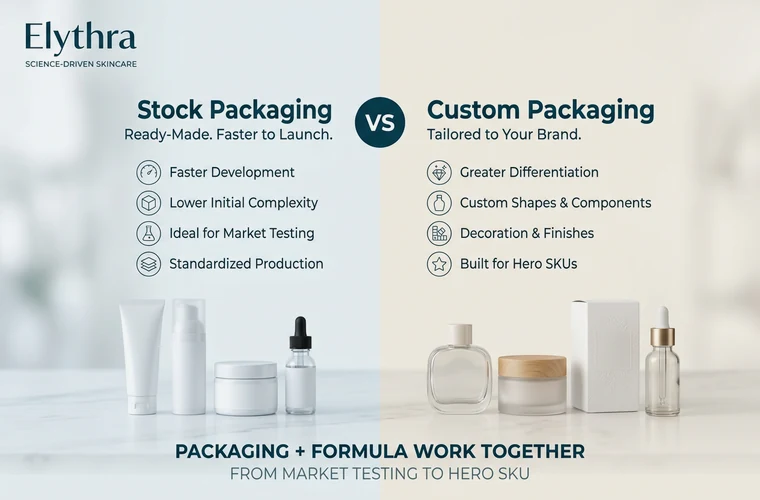

Stock Formula vs Custom Formula: Which Is Better for Your Skincare Brand?
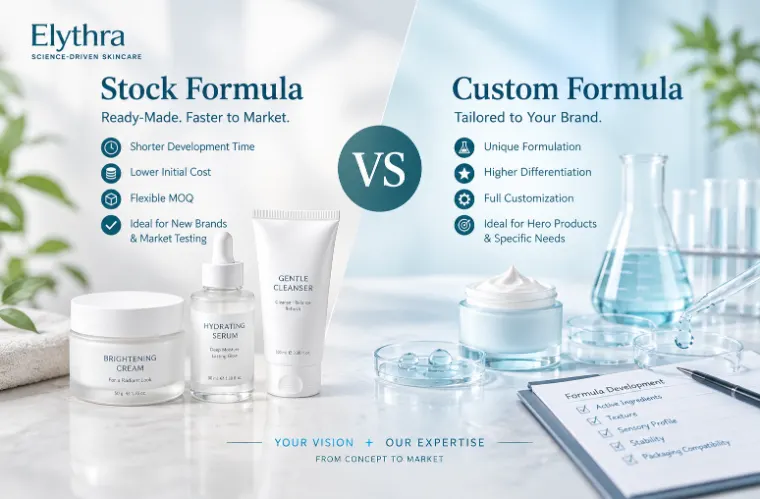
Not every skincare product needs to start from a completely new formula.
For some brands, an established formula provides the right starting point.
For others, a custom formula is essential for differentiation.
The choice between a stock or established formula and a custom formula should therefore be based on your business strategy, not simply development cost.
What Is an Established Formula?
An established formula is a formula concept already available from the manufacturer.
It can serve as a starting point for:
- Private label
- Market testing
- Faster product launches
- New product lines
Depending on the formula, selected modifications may still be possible.
What Is a Custom Formula?
A custom formula is developed or substantially adapted around the brand’s specific requirements.
Customization may involve:
- Ingredients
- Active systems
- Texture
- Sensory profile
- Product format
- Product positioning
- Benchmark development
How a custom formula is derived from a reference product is described in how to develop a skincare product from a benchmark.
Stock Formula vs Custom Formula
| Factor | Established Formula | Custom Formula |
|---|---|---|
| Starting Point | Existing formula concept | New or customized development |
| Development Speed | Generally faster | Generally longer |
| Customization | Selected | Higher |
| Development Input | Lower | Higher |
| Product Differentiation | Moderate | Higher potential |
| Initial Complexity | Lower | Higher |
| Suitable For | New launches / testing | Specific product concepts |
| Benchmark Development | Optional | More common |
| Formula Control | Limited / selected | Higher |
When Is an Established Formula a Good Choice?
You Are a New Brand
You may want to focus on branding, packaging and market launch rather than developing a completely new formula.
You Want to Test the Market
A smaller initial project can help validate demand.
You Need a Faster Starting Point
An established formulation can reduce early development work.
The Category Is Already Well Defined
If you know the exact type of product you need, an established formula may be sufficient.
When Is a Custom Formula Better?
You Need Differentiation
You do not want your product to look like another standard market formula.
You Have a Specific Ingredient Strategy
You want a defined active system.
You Have a Benchmark
You want a product developed around a specific reference.
You Have a Unique Texture Requirement
The product experience is part of your differentiation.
You Are Building a Hero Product
A custom formulation may give you more control over the product concept.
Which One Is More Expensive?
There is no universal answer.
A custom formula usually involves more development work, but total project cost also depends on:
- Formula
- Packaging
- MOQ
- Testing
- Production
- Customization
An established formula may have a lower development barrier, but custom packaging or additional testing can still influence the total project cost.
The right comparison is therefore Total Project Scope, not simply Formula Cost. The cost structure is broken down in how skincare OEM pricing is structured in China.
Which One Has a Higher MOQ?
MOQ depends on the project.
An established formula may offer more flexible production quantities for selected products.
A custom project may have a different MOQ because of:
- Formula development
- Raw material sourcing
- Packaging
- Production setup
- Customization
Ask the manufacturer for the MOQ of the complete project rather than assuming a universal number. Our skincare OEM MOQ guide explains how the requirement is calculated.
Can You Customize an Established Formula?
Often, some level of customization may be possible.
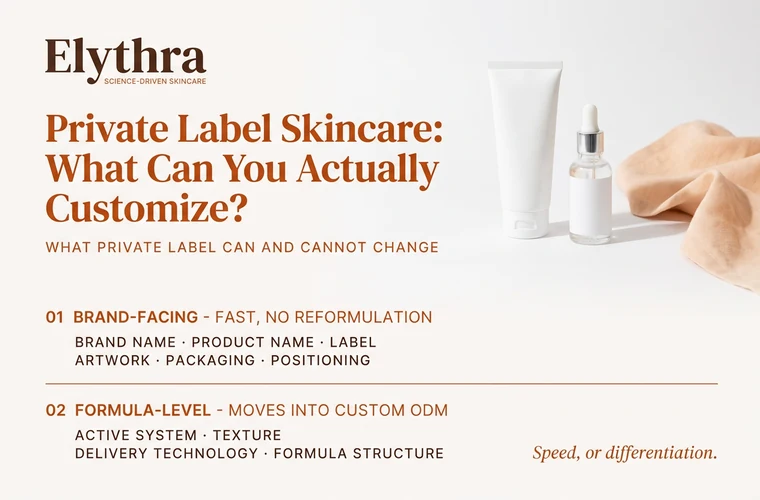
Potential adjustments can include:
- Texture
- Fragrance
- Packaging
- Product presentation
- Selected ingredients
However, extensive changes may turn the project into a new formulation project.
This is an important question to ask before starting.
Which Option Is Better for New Brands?
There is no universal answer.
A brand testing its first product may prefer an established formula to reduce initial development complexity.
A brand entering a highly competitive category may prioritize differentiation and therefore choose custom development.
The choice should be driven by Market Strategy rather than simply Lowest Upfront Cost.
Can a Brand Use Both?
Yes.
A hybrid strategy can be effective.
For example:
Supporting Products
Use established formulas for:
- Cleanser
- Basic cream
- Daily lotion
Hero Product
Develop a custom formula for:
- Brightening serum
- Firming serum
- Specialty treatment
This can provide a balance between launch efficiency and differentiation.
How to Decide
Ask:
- Do I need speed? → Consider an established formula.
- Do I need strong differentiation? → Consider custom development.
- Am I testing the market? → An established formula may be a practical starting point.
- Do I have a specific benchmark? → Custom development may be more appropriate.
- Am I building a long-term hero product? → Consider a custom formula.
How Elythra Beauty Supports Both Paths
Elythra Beauty can work with Established Formula Concepts for private label and faster product development, or Custom R&D for brands that require a more tailored product.
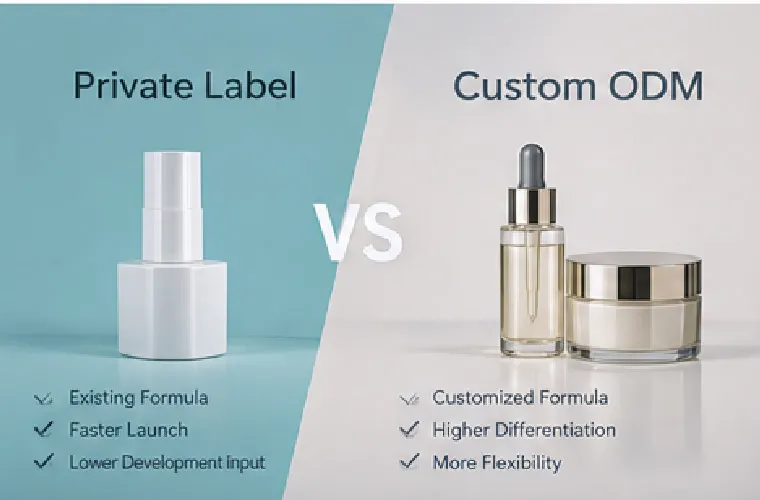
The two models can also be combined within the same product portfolio. The commercial difference between the two models is compared in private label vs custom ODM.
Formats already available can be reviewed in our product portfolio.
Final Takeaway
There is no universal winner between stock and custom formulas.
The better choice depends on:
For many brands, a hybrid portfolio may provide the most practical development path. Whichever route you choose, the schedule is shaped by the same stages described in the skincare product development timeline.
Ready to Develop Your Skincare Line?
Share your product concept, target market and estimated quantity. Our team reviews your brief and comes back with a formulation and production proposal.