How Is Skincare OEM Pricing Structured in China?
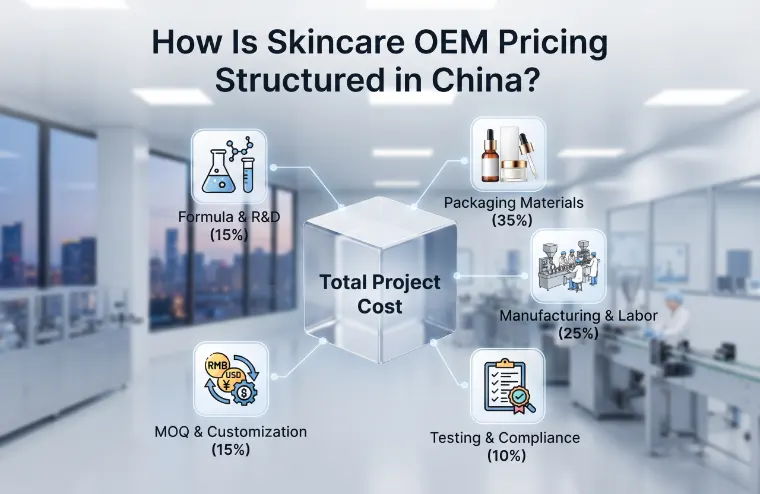
When a brand asks a Chinese skincare manufacturer for a quotation, the unit price is often the first number they see.
But unit price alone does not explain the real cost of a skincare OEM project.
A complete project may involve:
Understanding the structure behind the quotation can help overseas brands compare suppliers more accurately.
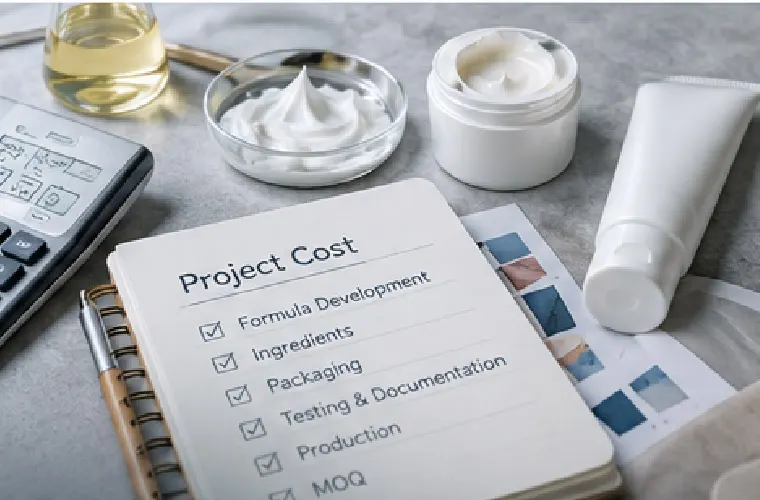
What Goes Into a Skincare OEM Quote?
A typical quotation can include several layers.
Formula
Existing formula or custom development.
Packaging
Bottle, pump, jar, tube, label, box and other components.
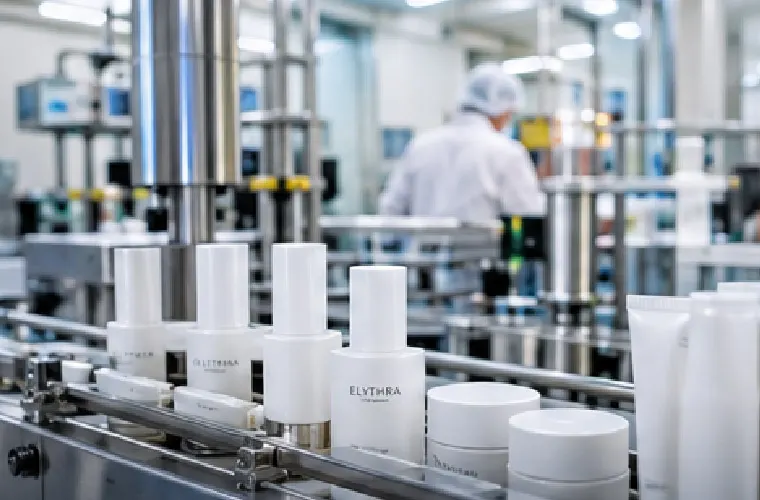
Production
Manufacturing and filling.
Testing
Required product evaluation.
Customization
Additional formula or packaging work.
Quantity
Production volume.
Other Services
Depending on the supplier and project.
Not every quote includes exactly the same items.
1. Formula Cost
Formula cost depends on factors such as:
- Ingredient type
- Ingredient concentration
- Formula complexity
- Packaging
- Development requirements
- Production quantity
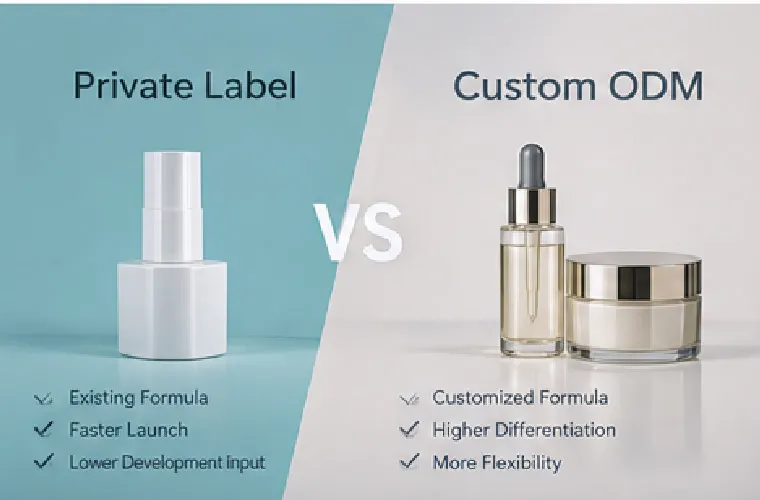
An established formula and custom formula can have very different cost structures. The comparison is covered in stock formula vs custom formula.
2. Ingredient Cost
High-cost ingredients can influence the formula price.
However, raw material cost should be evaluated alongside:
- Concentration
- Supplier
- Stability
- Formula performance
- Required quantity
A premium ingredient does not automatically justify a premium product price.
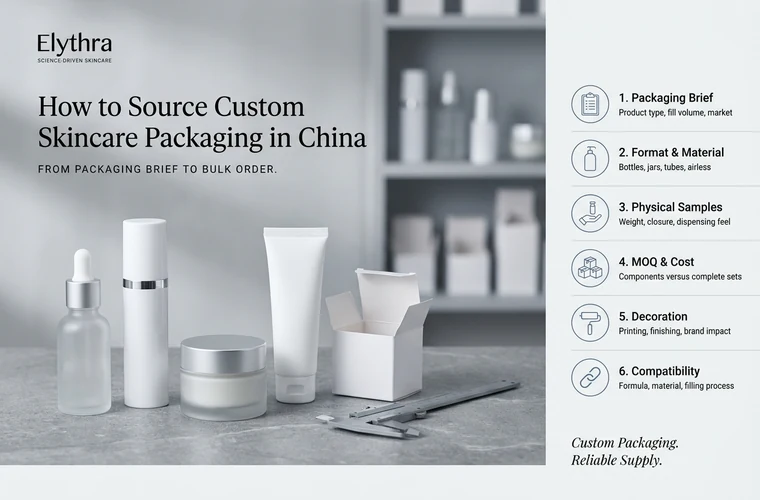
3. Packaging Cost
Packaging can be a major component of the overall project.
It may include:
- Container
- Pump
- Dropper
- Cap
- Label
- Box
- Decoration
- Custom components
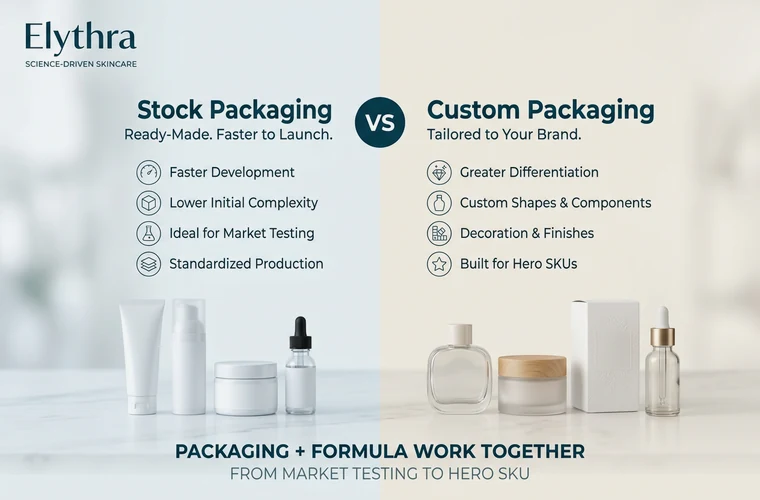
Stock packaging may allow more flexible project economics than fully custom packaging. Selection criteria are set out in how to choose skincare packaging.
4. MOQ and Unit Economics
MOQ influences unit price because production setup and other fixed costs are spread over the order quantity.
For example, a very small run may have higher unit cost, while a larger run may produce lower unit cost.
But the larger order also requires more upfront inventory investment.
The best quantity depends on the brand’s sales strategy. The underlying calculation is explained in our skincare OEM MOQ guide.
5. Customization
Customization can affect both development and production cost.
Examples:
- Formula changes
- Texture changes
- Active ingredient changes
- Packaging changes
- Custom components
- Custom artwork
- Benchmark development
The more customized the project, the more detailed the quotation should be. Benchmark-based work is described in how to develop a skincare product from a benchmark.
6. Testing
Testing requirements depend on:
- Product format
- Formula
- Target market
- Product claims
- Packaging
- Project requirements
A brand should therefore ask: Which tests are included in the quotation and which are additional?
This avoids unexpected costs later.
7. Production Quantity
Production volume has a direct relationship with the unit economics.
A project can be structured around small initial order for market testing, or a larger production run for a broader launch.
The right quantity should balance inventory risk with production economics.
Why Two Chinese Manufacturers Give Different Prices
Two suppliers may quote different prices for apparently similar products.
This can happen because of:
- Different raw materials
- Different formulas
- Different packaging
- Different MOQ
- Different quality standards
- Different testing
- Different service scope
- Different production equipment
A lower quotation therefore does not automatically mean the better commercial option. Capability should be evaluated as well, as described in how to audit a skincare OEM manufacturer in China.
How to Compare Chinese OEM Quotes
Use a common comparison framework.
| Cost Area | Supplier A | Supplier B |
|---|---|---|
| Formula | ||
| Packaging | ||
| Testing | ||
| MOQ | ||
| Unit Price | ||
| Lead Time | ||
| Customization | ||
| Documentation |
This creates a more accurate comparison.
Unit Price vs Total Project Cost
Imagine:
Supplier A
Lower unit price, higher MOQ, limited packaging.
Supplier B
Higher unit price, lower MOQ, more packaging flexibility.
Supplier A may appear cheaper initially.
But depending on your launch quantity and packaging requirements, Supplier B could have a different total project structure.
Therefore, compare Total Project Cost rather than only Unit Cost.
What Should Be Included in Your RFQ?
When asking for quotations, provide:
The better the brief, the more useful the quotation. A template is provided in how to prepare a skincare product brief.
How China OEM Pricing Changes With Project Stage
A project can move through:
Concept Stage
Estimated product direction.
Sample Stage
More detailed formulation and packaging evaluation.
Approved Product
Final formula and packaging.
Production
Final commercial quotation based on confirmed specifications and quantity.
This is why an early-stage estimate should not always be treated as the final production quotation.
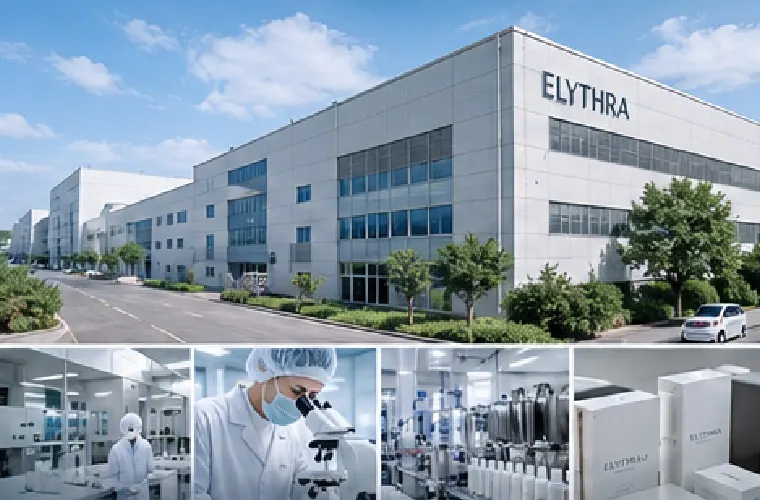
How Elythra Beauty Approaches Pricing
Elythra Beauty evaluates projects according to:
For selected established formulas, more flexible starting quantities may be available.
Custom projects are evaluated according to the specific development and manufacturing requirements. Where price positioning sits within the wider plan is covered in our skincare product development cost guide.
Final Takeaway
Chinese skincare OEM pricing is not determined by one number.
A realistic quotation reflects:
The best way to compare suppliers is to compare the complete project scope. Packaging sourcing is often a major variable, and is covered separately in how to source skincare packaging in China.
Ready to Develop Your Skincare Line?
Share your product concept, target market and estimated quantity. Our team reviews your brief and comes back with a formulation and production proposal.